Customer case: Pigarné with Brilliant Brains Bootcamp
Training food safety in the meat processing industry: Pigarné's approach in collaboration with Brilliant Brains Bootcamp
Welcome to our new website! Can't find something or experiencing issues with logging in or placing an order? Feel free to contact us.

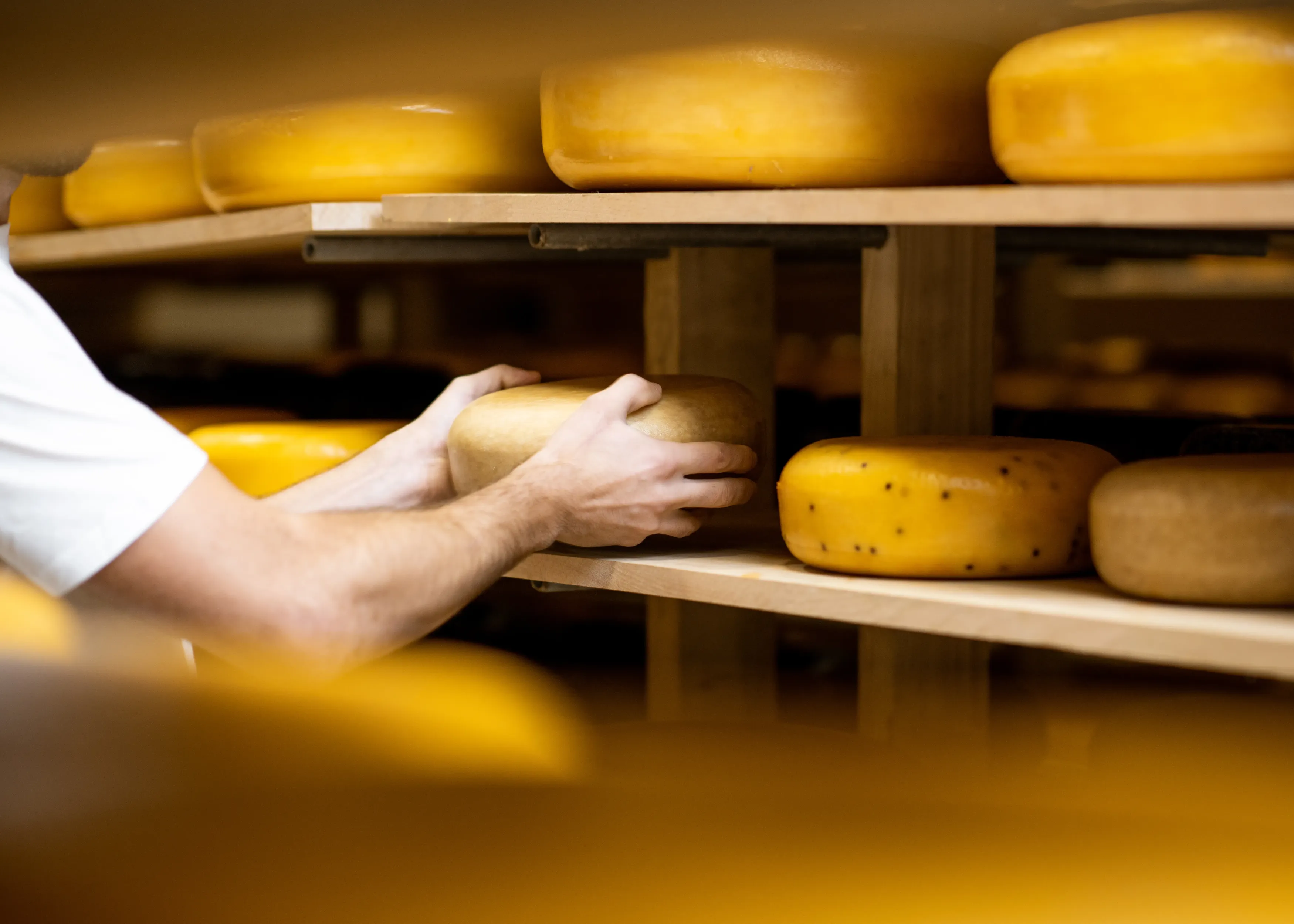
Reduce cutting hazards in the cheese industry
Prevent cutting hazards in the cheese industry with PPE, EN 388:2016 gloves, LOTOTO, training, and e-learning. Keep your employees safe with the right solutions, specially designed for the food industry.
In the cheese industry, employees work daily with sharp knives, cutting machines, and film cutters. This poses a significant risk: cuts are among the most common workplace accidents in the sector. In addition to personal injury, cutting incidents can lead to productivity loss, employee downtime, and hygiene issues.
Ensuring safety and reducing cutting hazards in the cheese industry. It is essential to implement effective measures to promote a safety culture, use the right tools and protective equipment, and regularly train employees on safe working methods. This also ensures compliance with the European Directive 89/391/EEC.

The first step is to gain insight into specific work situations. Without this assessment, it is not possible to implement an effective solution. At this cheese producer, cutting incidents occurred at various points in the production process. During the safety and hygiene scan, we mapped the risks in detail. Several things stood out:
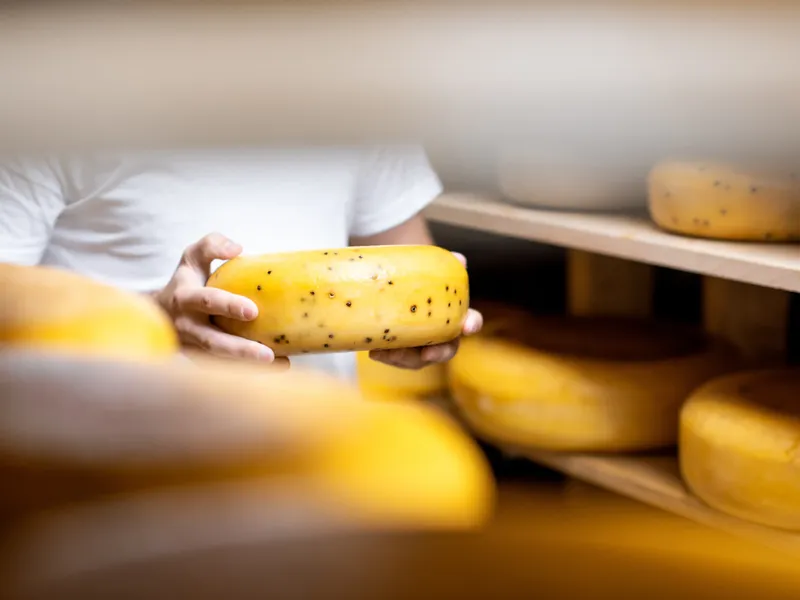
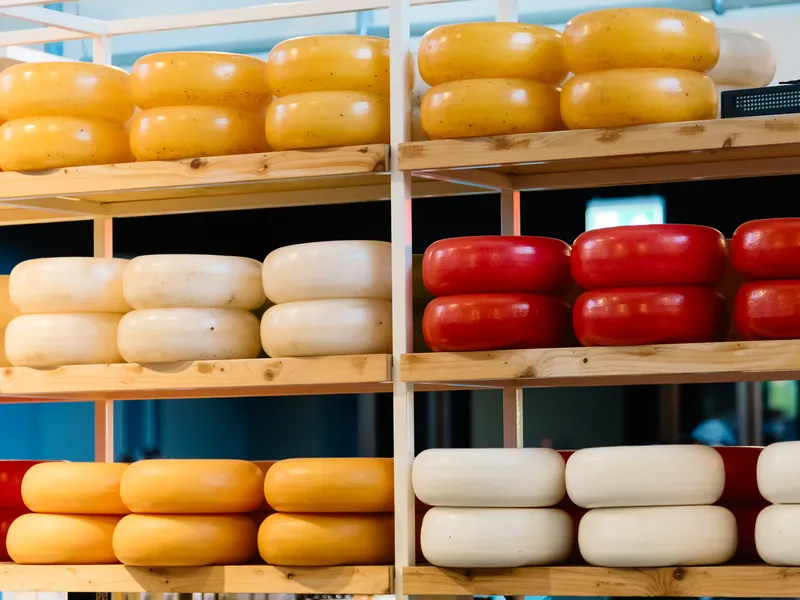
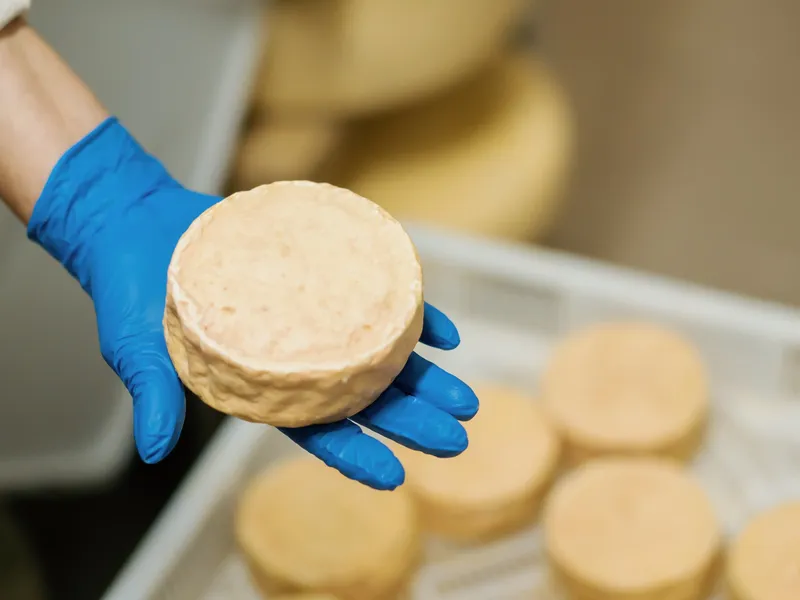
In the custom-tailored solution, three topics were central: the right gloves, implementing LOTOTO, and training for (new) employees.
Many companies struggle with finding the balance between safety and working comfort. Too thick gloves limit fine motor skills and tactile sensitivity. Too thin gloves provide insufficient protection. The gloves needed to be food grade anyway. For this cheese producer, our advice also took into account the chemical resistance required for cleaning the knives.
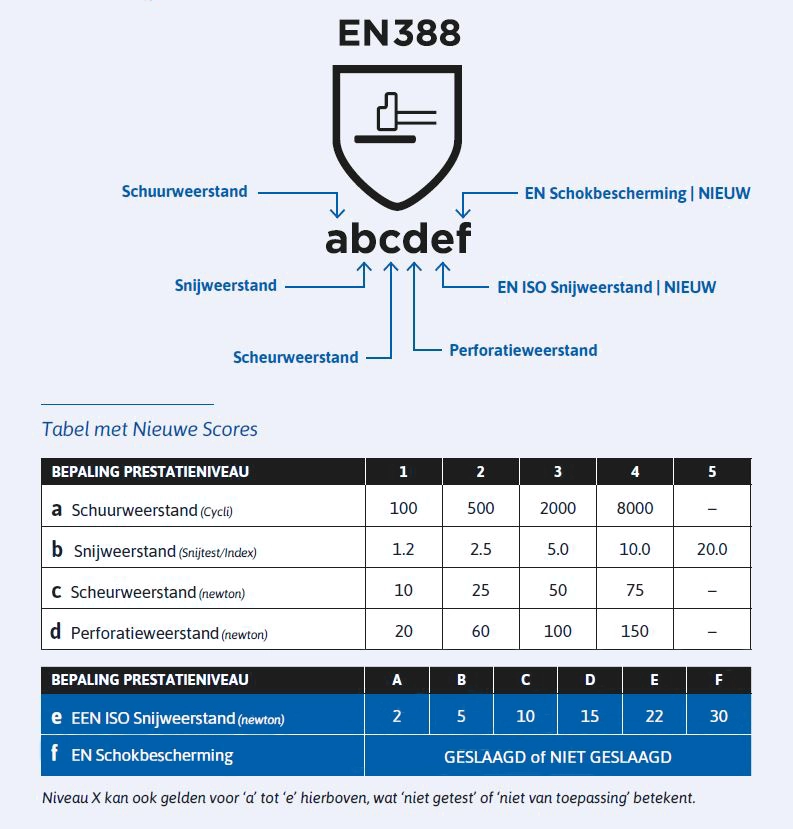
We selected cut-resistant and chemically resistant gloves suitable for the different tasks. We considered high cut protection (level F), and comfort was also an important requirement. It's possible to choose a single glove that is both chemical and cut-resistant. However, this would compromise the level of cut protection. In the case of this cheese producer, compromising on cut protection was not an option. Therefore, two different gloves were chosen for the two tasks.
For tasks involving sharp objects and machinery (maintenance), we recommended the cut-resistant gloves from Stahlnetz Cutguard and the Guide 6605. The manufacturer could make their own choice for the glove, depending on what the employees found comfortable to work with, the price, and the specifications of the glove.
EN 388:2016+A1:2018 (formerly EN 388:2003) is the standard applicable to all types of gloves that protect against physical and mechanical hazards resulting from abrasion, cutting, puncturing, and tearing.
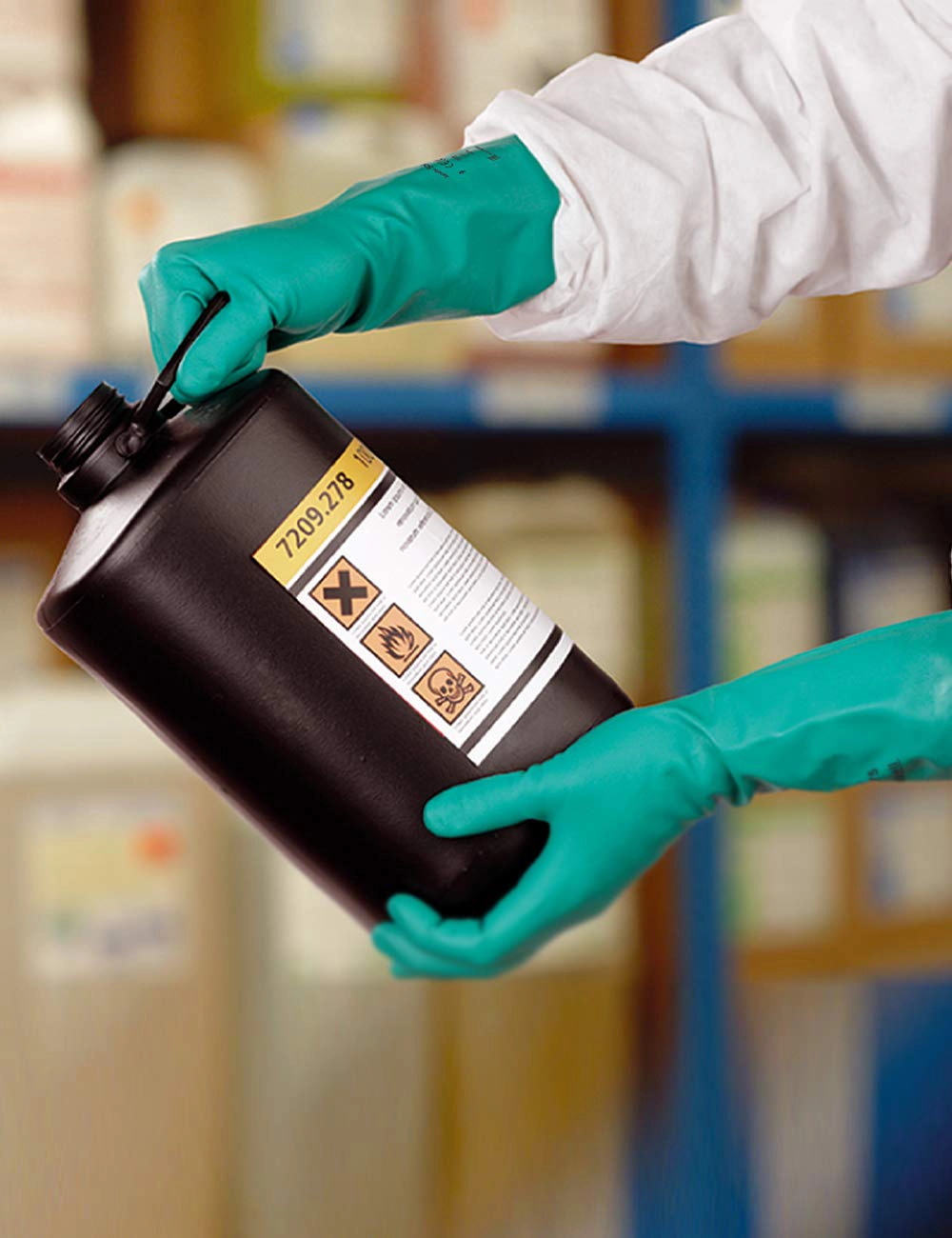
The cleaning of knives often took place in a machine or on a rack. Here they are covered with a cleaning agent. During these actions, chemical resistance is an important consideration. Since the recommended cut-resistant gloves are not also chemical resistant, other gloves must be used for this task. It is important that the advice takes into account whether the employee comes into contact with a diluted solution or a concentrated product. Since the solution was diluted, we recommended the Hycare disposable nitrile powder-free glove. These disposable gloves are a good and cost-effective option for this situation. If you work with a concentrated product, it is best to use the Ansell AlphaTec Solvex 37-675.
EN ISO 374:2016 is the standard (formerly EN 374:2003) applicable to all gloves that protect against hazardous chemicals and microorganisms. This standard defines strict requirements for permeation and degradation and classifies gloves into three types (A, B, C) based on their level of protection against specific chemicals, with corresponding pictograms and test methods.
An important bottleneck was the maintenance of cutting machines. Employees were changing blades or performing cleaning and repair tasks while the machine could still be active.
Together with our partner Brady, we implemented a Lockout-Tagout (LOTOTO) system. This system ensures that machines are completely locked during maintenance and cleaning. It prevents employees from accidentally activating a machine while another colleague is working on it.
The advice included the Brady group lock box and the Brady nylon safety locks in various colors for different zones. With the correct safety signals and pictograms, hazards around the machines were made extra visible.
Employees were informed and trained on the use of the new products and processes. You can read more about this in the next topic of the case study.
A safe workplace is not only created by the right products but also by aware employees. That's why we provided a practical safety training for this cheese producer. In this training, employees learned:

To structurally embed this knowledge at this cheese producer, we also got to work with the Brilliant Brains Bootcamp. This program offers employees the opportunity to follow online onboarding or refresher training courses. All employees who successfully completed the training courses received a certificate. This means that the knowledge is demonstrably present in the company and that you, as a producer, once again comply with the standards of BRCGS, FSSC22000, and IFS.
Safety is not a one-time project, but a continuous process. We maintain communication to monitor the effectiveness of the measures. Are there any new risks? Then we optimize the solution.
After determining the appropriate protective equipment and safety measures, we ensured that delivery was organized quickly and efficiently. The ordering process is made as smooth as possible.
Thanks to the digital ordering environment, this customer can easily reorder products and manage inventory without administrative hassle. The customer gets a personal (online) portal with preset order lists. Thanks to our large warehouse and our own transportation, we are often able to provide quick delivery times. If an item is not in stock in our warehouse, we quickly liaise with our suppliers to get the necessary items delivered as soon as possible.
By setting a fixed delivery time, it is clear on which day you can expect a delivery.