Customer case: FI&S enhances safety and quality control
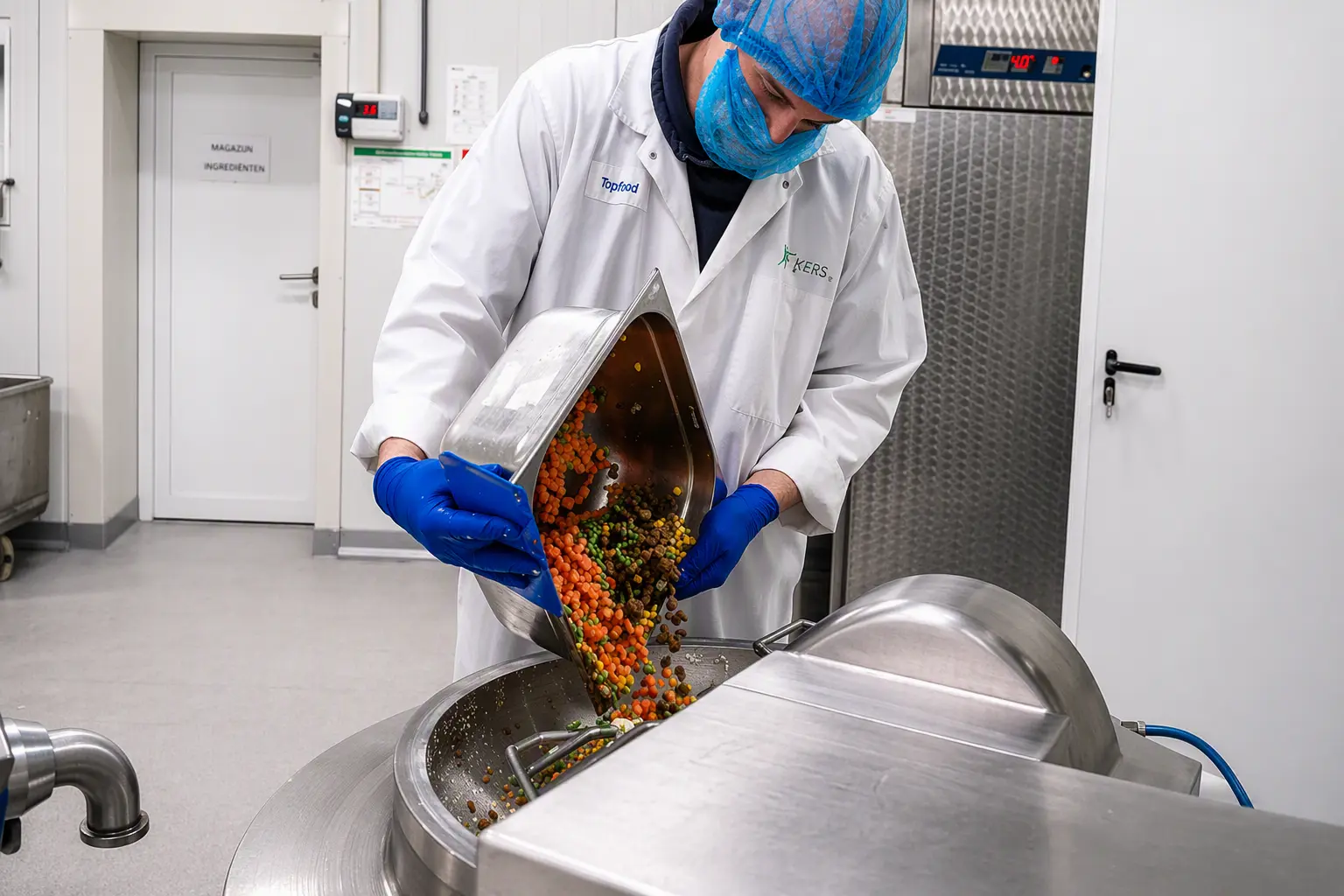
FI&S and Brilliant enhance food safety, employee safety, and quality control in spice processing.
Welcome to our new website! Can't find something or experiencing issues with logging in or placing an order? Feel free to contact us.

Training food safety in the meat processing industry: Pigarné's approach in collaboration with Brilliant Brains Bootcamp
As a specialized piglet slaughterhouse, Pigarné processes between 2,500 and 3,000 piglets weekly, mostly for export markets. The work in the slaughterhouse and deboning plant comes with risks concerning hygiene, food safety, and worker safety, partly because the tasks are largely manual. To ensure everything proceeds hygienically and (food) safely, Pigarné operates according to the requirements of FSSC 22000 and QS (Qualität und Sicherheit).
By complying with FSSC 22000, Pigarné demonstrates that they adhere to HACCP principles, work according to strict hygiene requirements and processes, and ensure traceability and continuous improvement.
One of the processes that need to be secured is the training and education of employees. Some of the employees have worked there for many years. At the same time, there is also an influx of new employees. "Most come in here with no prior knowledge [...] and explaining food safety in another language is just very difficult," says Jur Bulsink, quality manager at Pigarné. "And that carries risks. If someone doesn't understand what they are doing, you not only have a food safety issue but also a safety issue for that person themselves."
To make the training and education of employees in various languages not only effective on the work floor but also demonstrably compliant with laws and regulations, Pigarné has been using Brilliant Brains Bootcamp since last year. "It works well because it is easy to use, employees can learn in their own language, and I have all the information regarding training directly available on the platform."
At Pigarné, the challenge was not the lack of training but the fact that they were not always effective. “New employees often start with no experience. A few are experienced, but many start without a background in meat processing.”
On top of that, there was the issue of language. The workplace is international, and not everyone speaks Dutch or English. “Try explaining something as complex as food safety in a way that everyone understands. Explaining food safety in another language is just very difficult.”
To train employees, classroom sessions were organized in the canteen. Everyone gathered together, presentation on, explanations given... “In theory, that makes sense and seems sufficient, but in practice, it falls short. The trainings were given in English, so half of the people barely get anything. You see them sitting there, listening, but I already know: this isn’t getting through.” And that’s frustrating. Because if someone doesn’t understand what they’re doing, you see it directly in the workplace. We can demonstrate slaughtering; that goes well. But conveying a bit of knowledge about why you do something is just difficult to do that way. You need a bit of theory for that.”
There was also the practical side for Jur. Everything surrounding training needed to be tracked manually. “You’re working with Excel lists, having to keep track of who did what and when. You spend a lot of time on that, and I still wasn’t sure if they really understood it. Sometimes, it felt more like ticking a box than actually contributing to a food-safe and safe working environment.”
In daily practice, Bootcamp at Pigarné is mainly used as a starting point for training. New employees receive access to e-learning modules, in which the basics of food safety and safety are explained before they further go onto the work floor.
For Jur, it was actually quite simple: the way they were doing it wasn't adequate for the practice of a slaughterhouse. And in this environment, you can't afford that. "It just has to be right. You can't make mistakes here because someone didn't understand it properly." He wasn't looking for a complicated system or a theoretical solution, but something that just works on the work floor. Something that aligns with how his people learn. "You just want people to understand what they're doing. Regardless of where they come from or what language they speak."
Other solutions often offered separate e-learning modules or required extra administration alongside. This meant standard e-learnings that cannot be adapted to the own work environment, working in multiple systems, and still manually keeping track of what happened. Exactly what Jur wanted to avoid. Bootcamp brought that together in one environment: creating, following, and monitoring training.
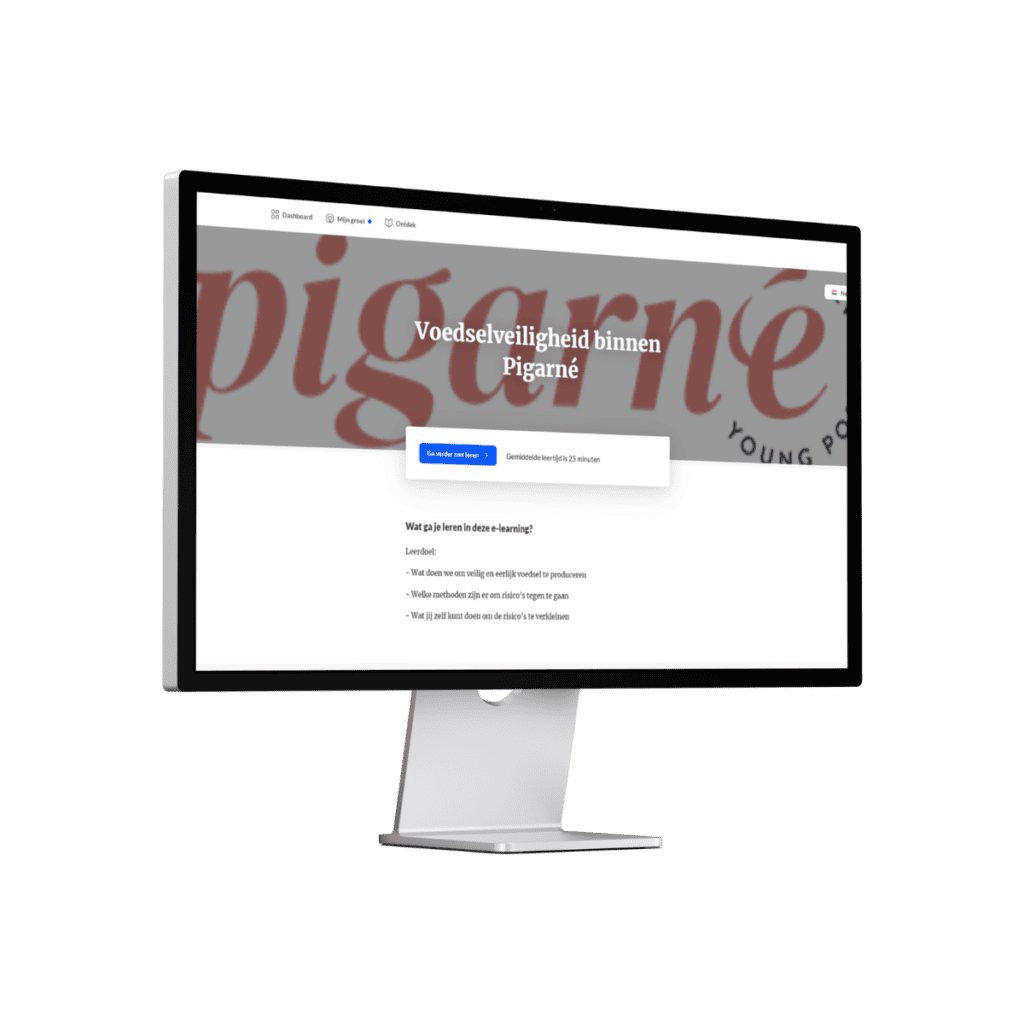
When Bootcamp was introduced, one thing in particular stood out right away. “The languages—that’s a big plus. Whereas training sessions used to be conducted in English and sometimes went over employees’ heads, they can now learn the basics in their own language. That makes an immediate difference in understanding.”
But it wasn’t just the employees who benefited. Something changed for Jur himself, too. “You can see who did what instead of keeping track of an Excel list.” Where he used to have to search, track, and verify, he now has a clear overview. At a glance, he can see who has completed training and where action is still needed.
And perhaps even more importantly: he has greater confidence that the fundamentals are actually sinking in. “After a training session, employees take a test that they must pass. This gives me both a better overview and greater certainty. And that’s what I was missing before.”
In daily practice, Bootcamp is primarily used at Pigarné as a starting point for training. New employees gain access to e-learning modules, which explain the basics of food safety and safety before they proceed further onto the shop floor.

E-learning and in-person training both present challenges. Whereas everyone automatically attended in-person training sessions, e-learning requires more guidance. “With a training session like that in the cafeteria, you know everyone is there. Now it’s more a matter of personal initiative […] and sometimes you have to reach out to them.” This is a particular point of attention for employees who are less digitally savvy. “Helping them get started or sending a reminder is part of the process. But once they’re in the system, things run smoothly on their own, and the training is better ensured.”

While you might expect employees to lose interest, for some, the exact opposite is happening. “There are also guys who say, ‘Do you have anything more in-depth? We didn’t expect this.’ Whereas training used to be something that was mainly a ‘must,’ you now see that some employees are actually developing an interest in it.” People who are normally focused on practical tasks are, after all, curious about the “why” behind their work. This leads to greater engagement and a sense of ownership on the job. Employees pay closer attention and contribute their ideas more often.
And that’s ultimately what it’s all about: not just people who do their jobs, but people who understand what they’re doing and why it matters.
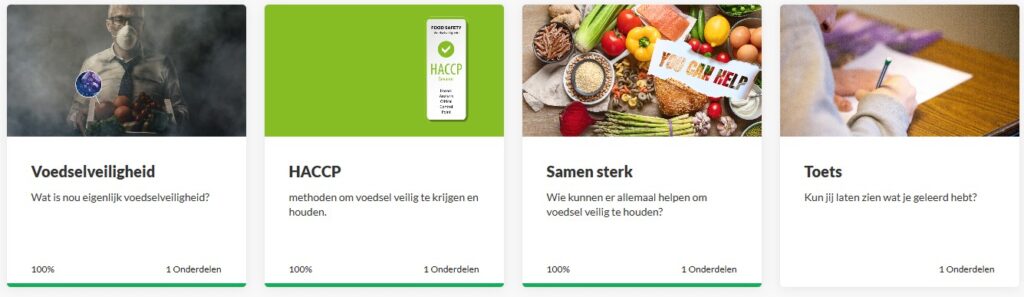
Looking ahead, Pigarné wants to embed Bootcamp even more firmly into the process, making the training a standard part of onboarding—preferably even before someone starts working on the job. “At the moment, onboarding is still partly traditional. It’s still old-fashioned, with a booklet […] and then they receive food safety training through Brilliant Brains Bootcamp. That training is often done during the initial period, but not always before someone starts. That’s exactly where Jur sees room for improvement.” The goal is therefore to implement Bootcamp earlier, so that new employees are familiar with the key principles even before their first day on the job.
By shifting onboarding from “learning on the job” to “starting prepared,” Pigarné aims to reduce risks and further improve quality on the job site.
It is precisely this combination that ensures training is not only organized but truly implemented on the work floor.
"I would definitely recommend Bootcamp to other companies. Not only in the meat processing industry, but Bootcamp has advantages for any food processing company." Based on this foundation, Pigarné aims to further develop Bootcamp in the coming years as a permanent part of onboarding and daily practice, so that employees not only know what they are doing but also understand why it is important.