Why frequency and intensity of cleaning and disinfection are so important in the food industry
As we mentioned earlier, hygiene in the food industry is the foundation of food safety. A daily clean is a logical basis for this. However, in a modern production environment, it's almost never enough. Equipment, floors, and pipes are often complex, causing dirt to easily accumulate in places you don't reach daily. Moreover, the risk varies per surface: a conveyor belt that comes into direct contact with food requires more attention than a corridor outside the production area.
Frequency determines how often you clean, intensity how thoroughly it's done. Together, they are the key to a hygiene plan that is not only "audit-proof" but also protects your brand and your consumers.

Four zones in the production environment: how often to clean and disinfect
In the food industry, it is common to work with a division into four zones, each with its own risk profile and therefore its own frequency of cleaning and disinfection.
Zone 1: food contact surfaces
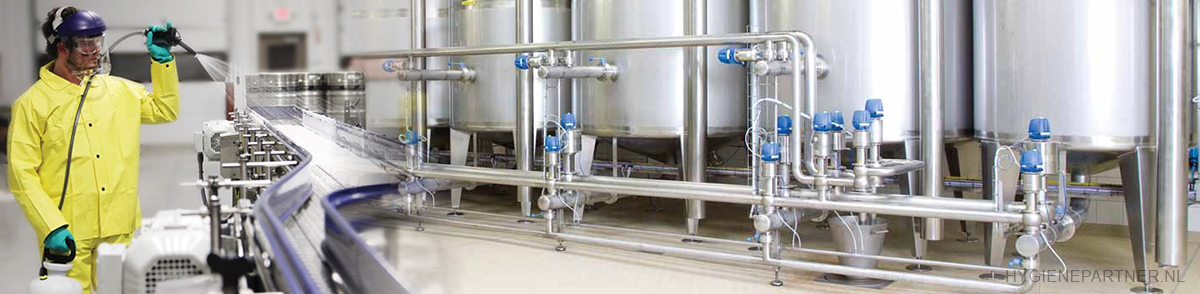
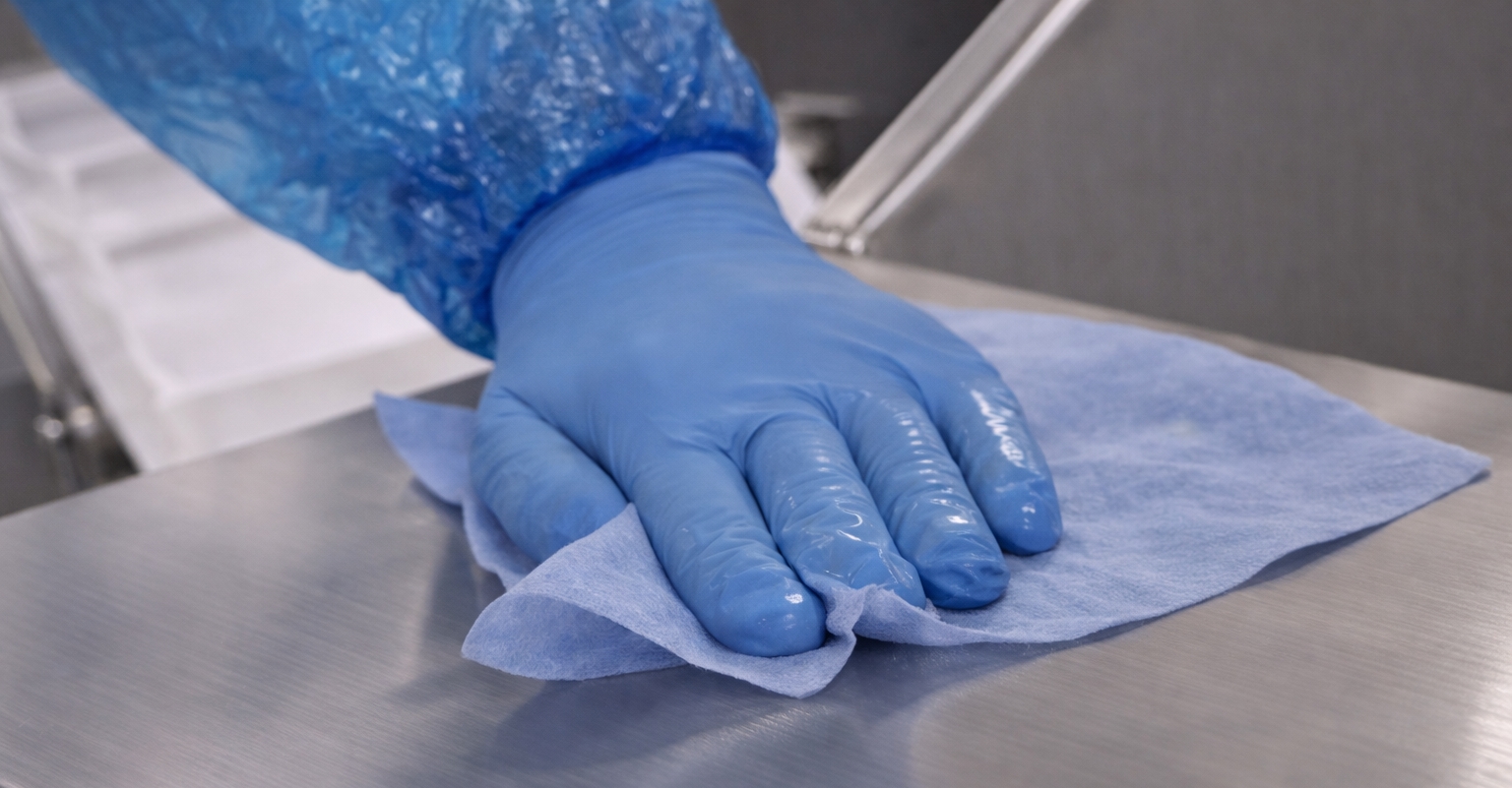
- Examples: tank interiors, packaging and conveyor belts, hoppers, pipelines
- Monitoring: weekly
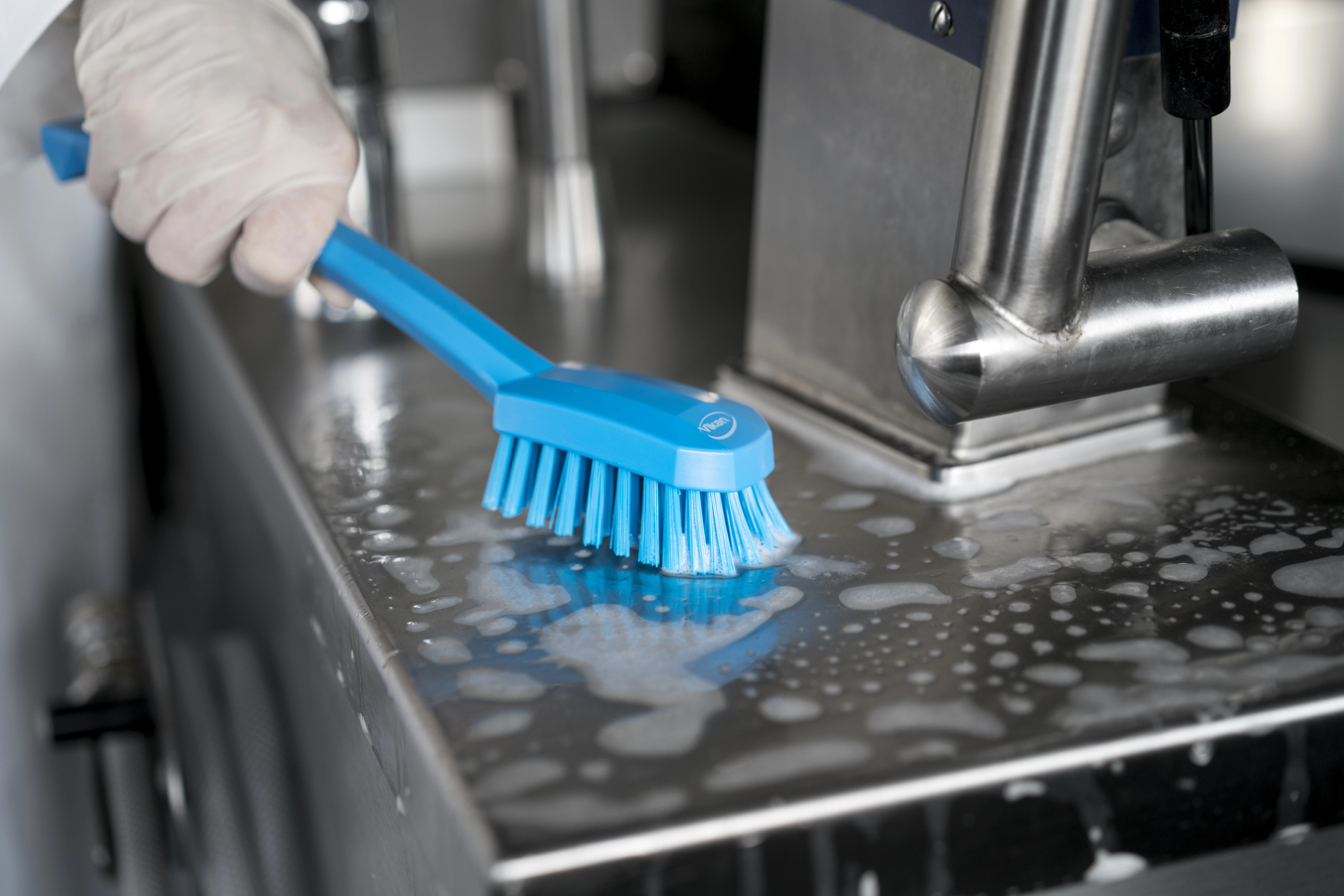
- Cleaning & disinfection: daily
This zone forms the heart of food safety. There is no room for concessions here: daily end-cleaning and disinfection must be an integral part of your cleaning plan.
Zone 2: immediate surroundings of food contact
- Examples: equipment housing, floors, drains near production lines
- Monitoring: monthly
- Cleaning & disinfection: daily to weekly (depending on contamination)
Although these surfaces do not have direct food contact, they can form indirect contamination routes. Consider splashing water or contact with employees.
Zone 3: remote surfaces with contamination risk
- Examples: forklifts, wheels of garbage bins, walls, or floors outside direct production lines
- Monitoring: every three months
- Cleaning & disinfection: weekly to monthly
Contamination often "sneaks in through the back door" here. Less directly visible, but it can be dangerous.
Zone 4: outside the production environment
- Examples: hallways, storage rooms for raw materials, external walls and floors
- Monitoring: every six months
- Cleaning & disinfection: monthly
This zone may seem less important, but do not underestimate the risk. Contamination can still move towards production through personnel, transportation vehicles, and airflow.
Note: The above is the guideline we use. There are no fixed laws or rules established that dictate how often a production environment should be cleaned. It simply has to be clean. With a baseline measurement, you determine which frequencies and intensity best fit your situation. Every production environment is unique. It then becomes a matter of trial and error to arrive at an efficient and effective cleaning plan.
Zone 1: Voedselcontact-oppervlakken
Deze zone vormt het hart van voedselveiligheid. Hier is geen ruimte voor concessies: dagelijkse eindreiniging en desinfectie moeten een vast onderdeel zijn van je reinigingsplan.
Zone 2: Directe omgeving van voedselcontact
Hoewel deze oppervlakken geen direct voedselcontact hebben, kunnen ze wel indirecte besmettingsroutes vormen. Denk aan opspattend water of contact met medewerkers.
Zone 3: Afgelegen oppervlakken met besmettingsrisico
Hier sluipt besmetting vaak “door de achterdeur” binnen. Minder direct zichtbaar, maar het kan wel gevaarlijk zijn.
Zone 4: Buiten de productieomgeving
Deze zone lijkt misschien minder belangrijk, maar onderschat het risico niet. Via personeel, transportmiddelen en luchtstromen kan vervuiling alsnog richting de productie gaan.
Let op: bovenstaande is de richtlijn die wij hanteren. Er zijn geen vaste wetten of regels vastgesteld die bepalen hoe vaak je een productieomgeving moet reinigen. Het moet simpelweg gewoon schoon zijn. Met een 0-meting bepaal je welke frequenties en intensiteit het beste passen bij jouw situatie. Iedere productieomgeving is immers uniek. Daarna is het een kwestie van trial en error om zo tot een efficiënt en effectief reinigingsplan te komen.
Intensity of cleaning and disinfection: from daily to corrective
1. Daily cleaning
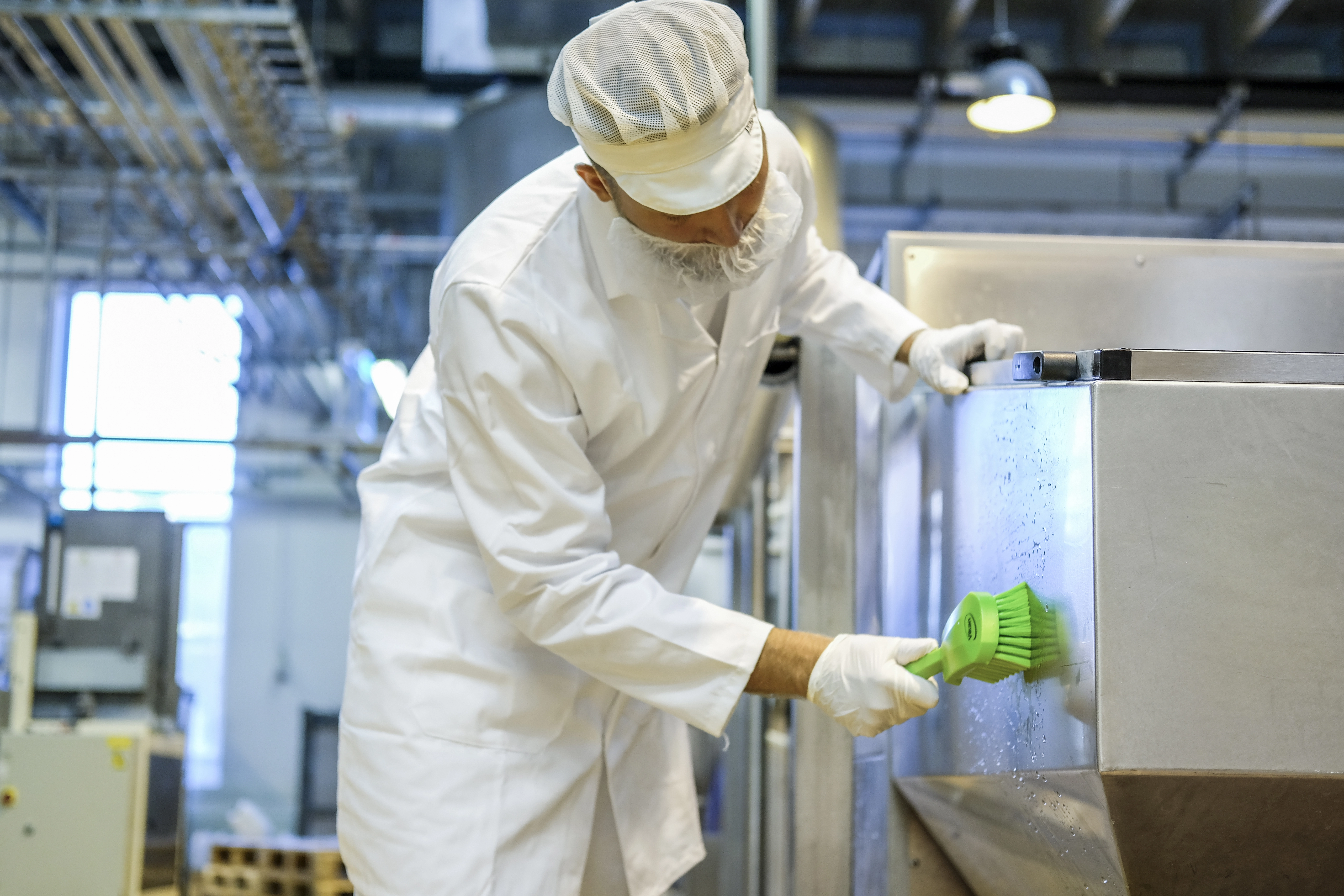
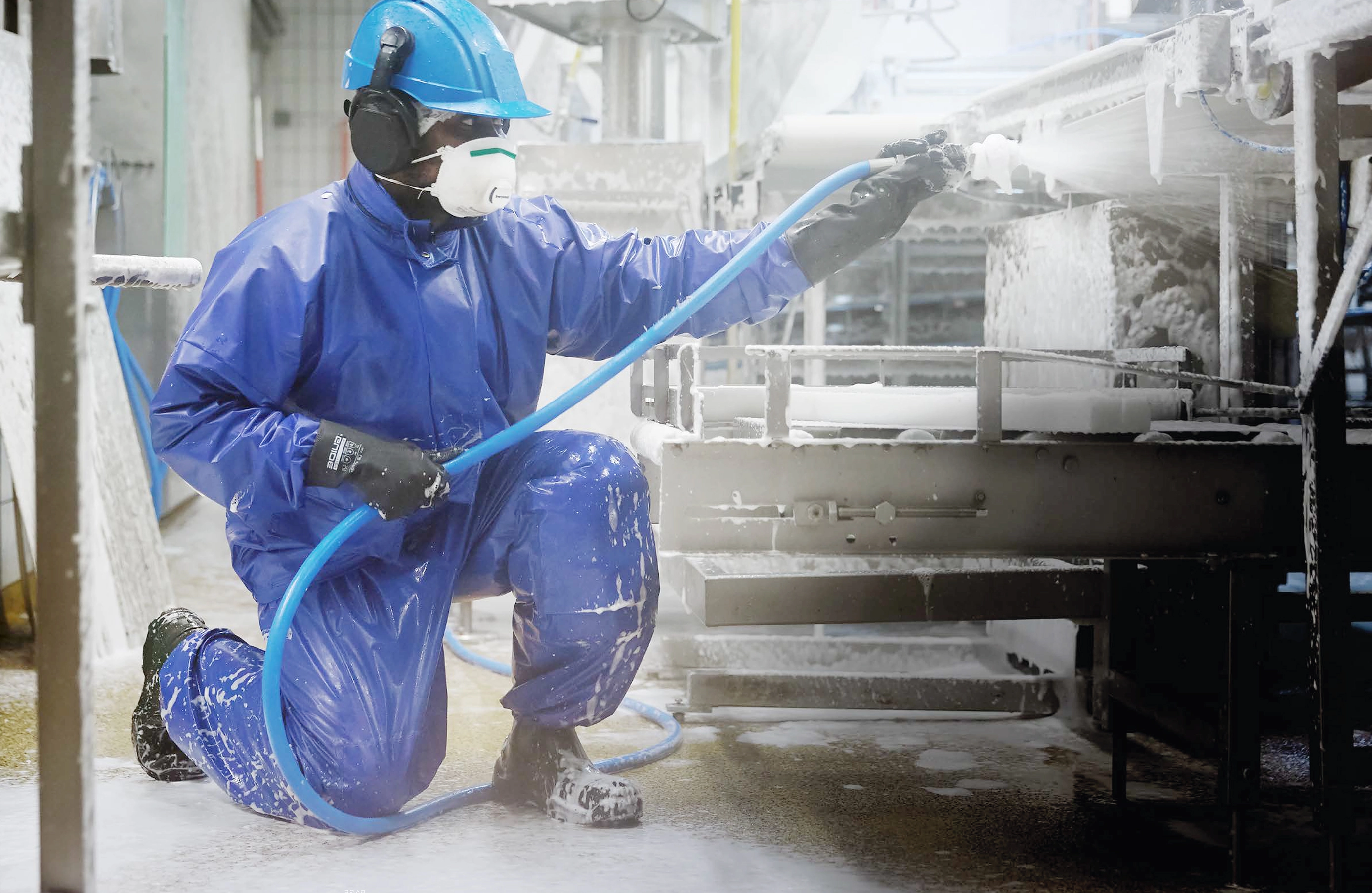
The basis of every hygiene plan. At the end of the production day, all machines, equipment, and the production environment are cleaned and disinfected so that production can start safely the next day.
2. Interim cleaning
Interim cleaning is carried out during product changes or when there is a higher risk of cross-contamination, for example with allergens. It is often quicker and less extensive than final cleaning, but is essential for production lines that manufacture several different products.
3. Periodic deep cleaning
A planned, intensive cleaning of hard-to-reach areas such as seams, the inside of control cabinets, crevices, and ventilation ducts. Often combined with maintenance, so that machines run safely and efficiently again. When cleaning and disinfecting machines, it is advisable to use LOTOTO.
4. Corrective cleaning
When something goes wrong, for example in the event of a contamination incident or negative audit findings, corrective cleaning and disinfection are necessary. This is targeted, intensive, and carried out immediately to eliminate risks.
From theory to practice: how Task Manager helps
Theory is nice, but practice requires structure and discipline. How can you ensure that the right tasks are performed at the right time? How do you make sure that periodic deep cleanings don't get "lost along the way"?
This is where Task Manager comes in
With the digital Task Manager:
- You plan frequencies and intensities in advance. Daily, weekly, and periodic tasks are automatically scheduled.
- You get real-time insight. You can immediately see if tasks have been completed and where backlogs arise.
- You secure audits. All performed cleanings and samplings are logged, so you always have proof for BRCGS, IFS, or FSSC 22000.
- You work more efficiently. No more separate Excel lists or paper checklists, but one central tool that keeps track of everything.
This way, hygiene becomes not just a matter of cleaning, but also of smart organizing.
Conclusion: cleaning is custom work
Cleaning and disinfection in the food industry is about more than "a daily scrub." It involves:
- Smartly adjusting frequency and intensity per zone.
- Combining daily cleaning with interim, periodic, and corrective actions.
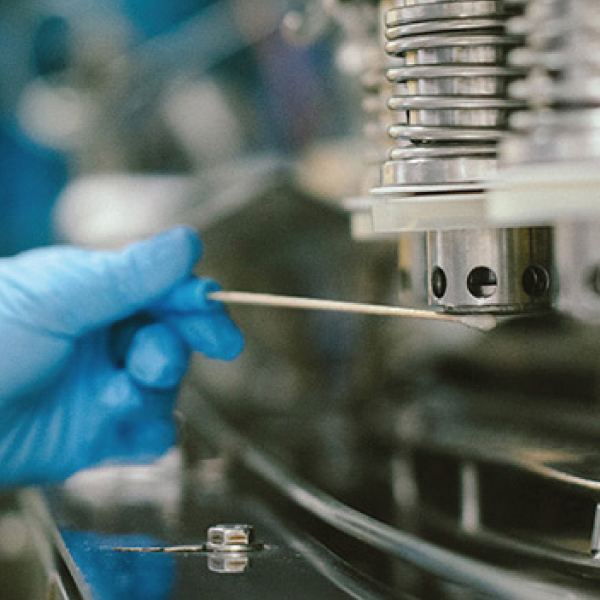
- Targeted sampling to timely signal microbiological and allergen risks.
- Using Task Manager to plan, secure, and report tasks.
This approach ensures not only that your production environment is clean for the next audit, but more importantly, that your products are safe and your brand remains reliable. Want to know how Task Manager can help you smartly organize cleaning and disinfection? Contact us. We would be happy to show you how you can create overview, assurance, and peace in your hygiene process with a single tool.