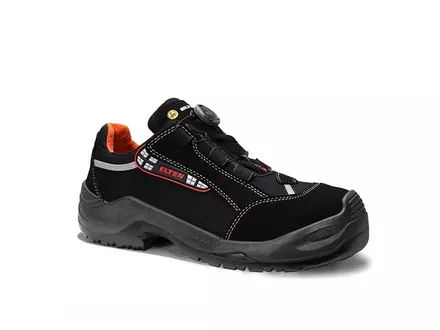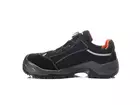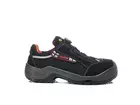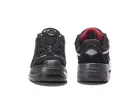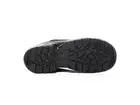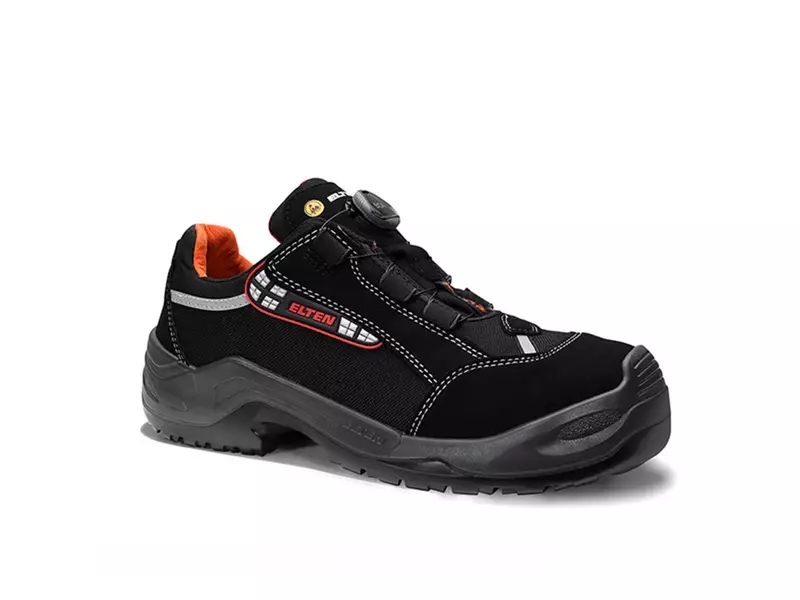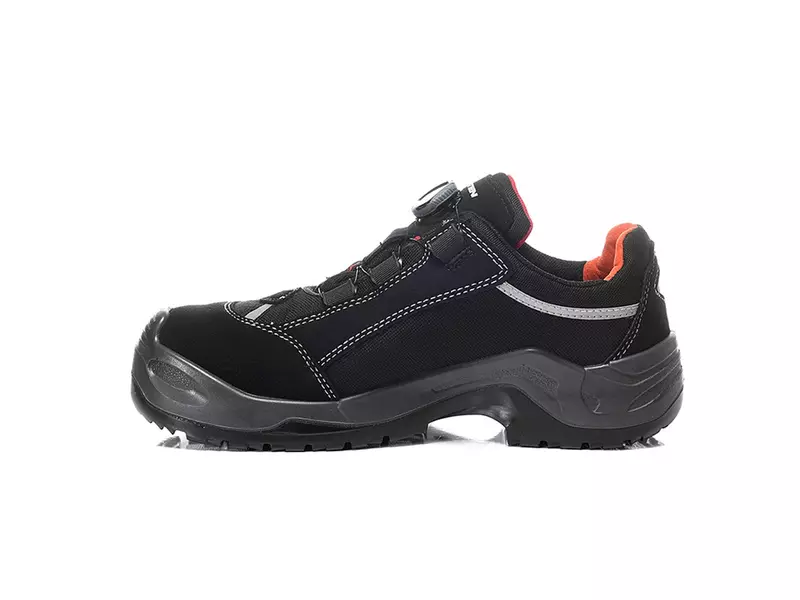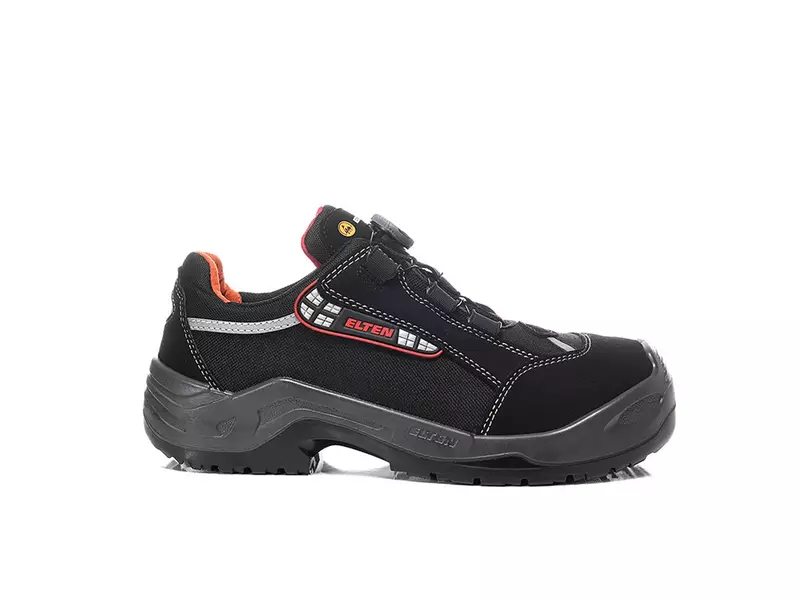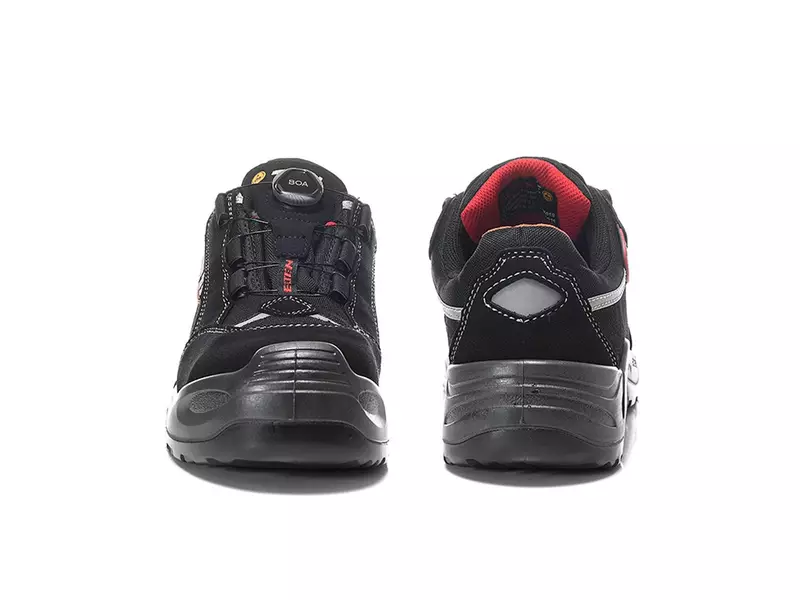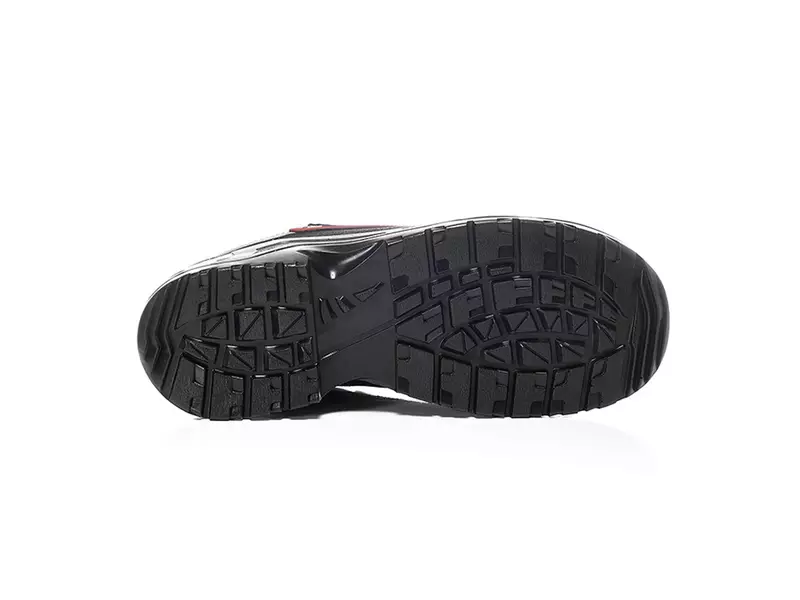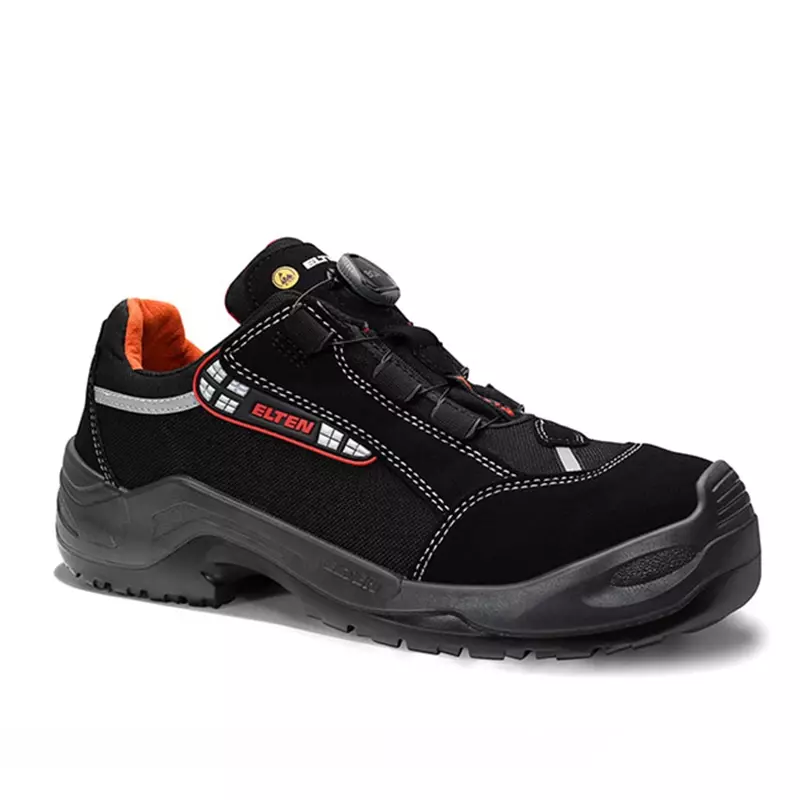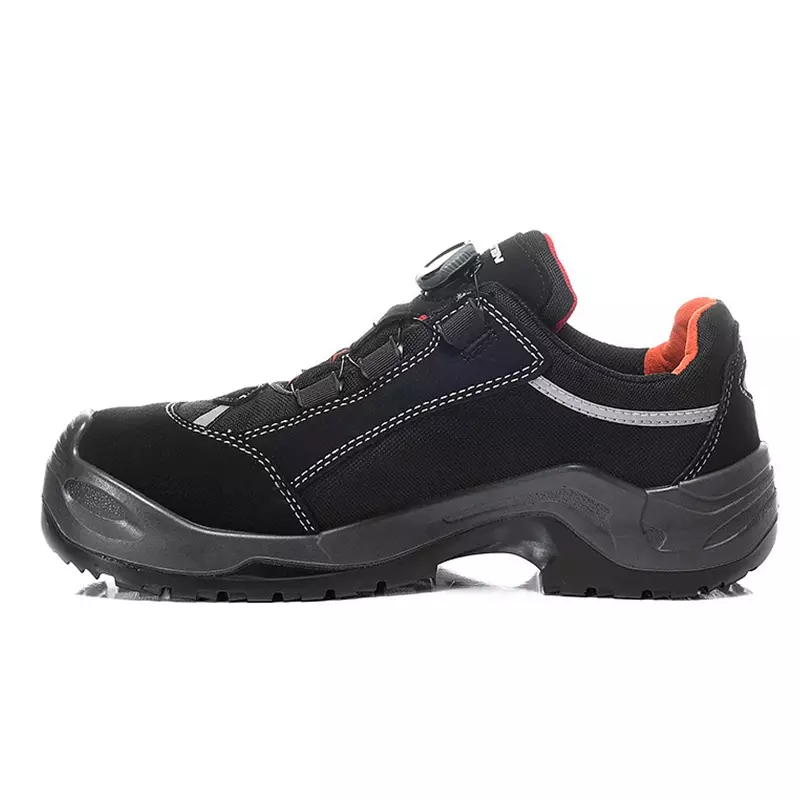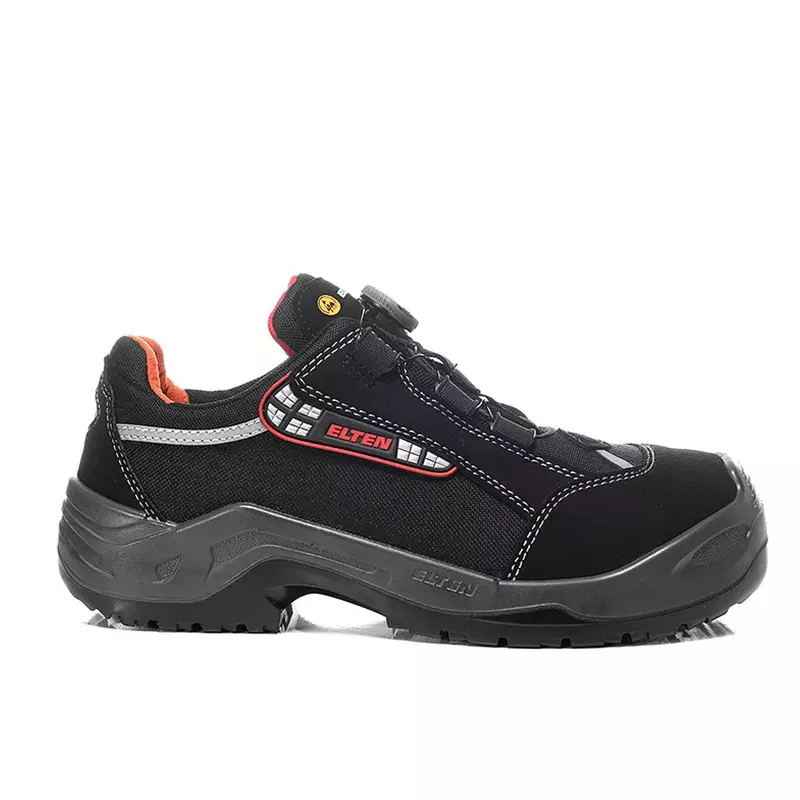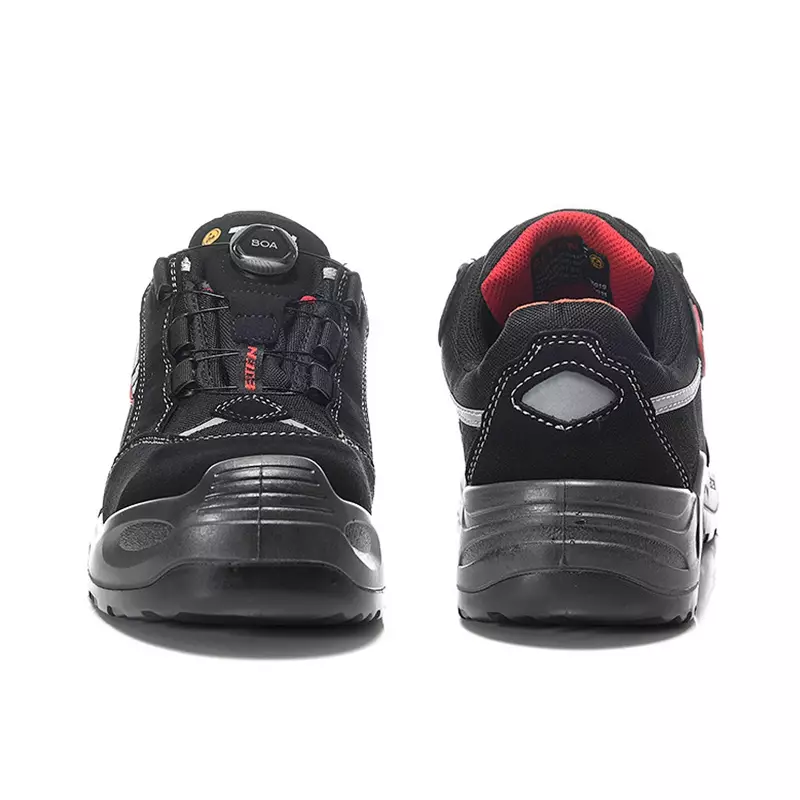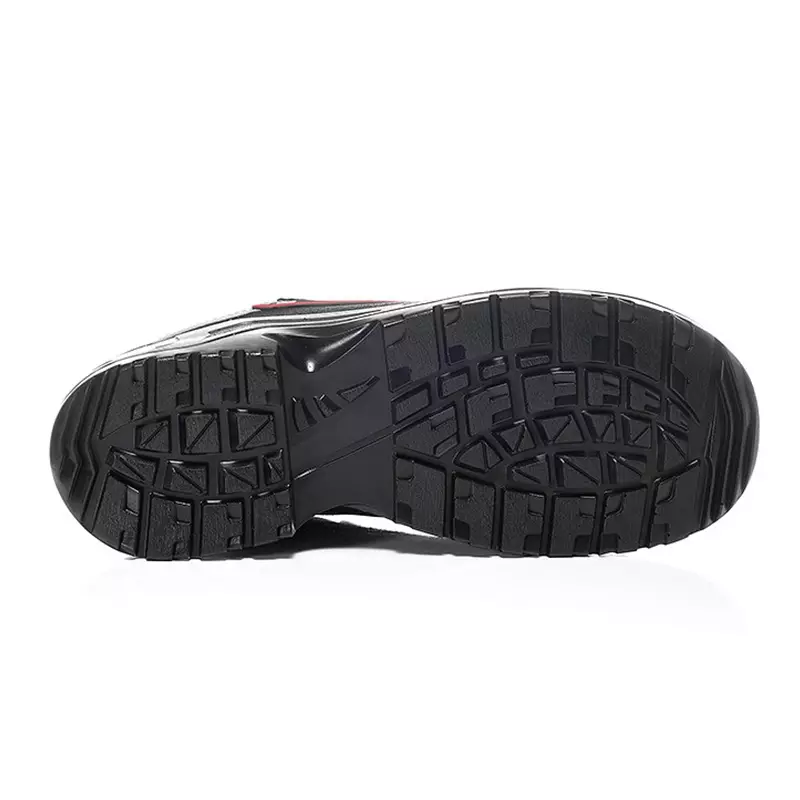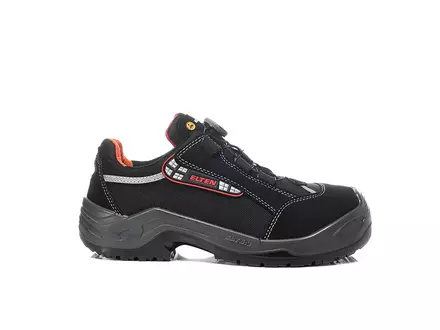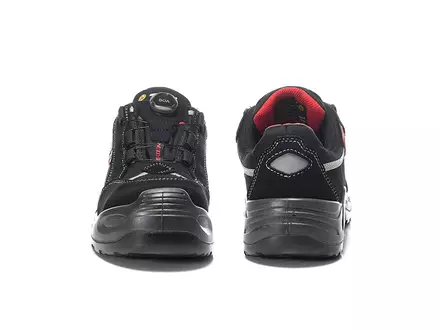

The Elten Senex safety shoe with BOA closure is an extra-wide safety shoe featuring an aluminium toe cap and a metal-free protective midsole. Equipped with a BOA Fit System, SRC anti-slip sole, and ESD certification. Made of hydrophobic Cordura microfiber/textile with a breathable textile lining. Features a coarse-treaded PU/PU Safeguard sole.
- Comfortable low safety shoe.
- Hydrophobic microfiber/hydrophobic CORDURA textile.
- Breathable textile lining.
- S3 safety classification.
- SRC anti-slip sole.
- Features ESD
- Padded water tongue.
- Features an SRC anti-slip sole.
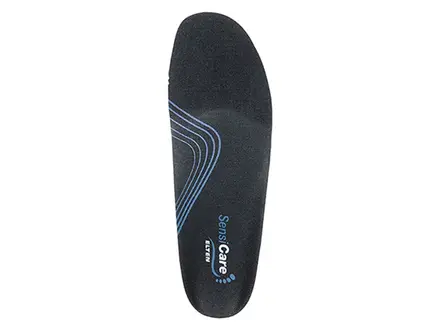
- Semi-orthopedic insole ESD grey.
- Metal-free midsole.
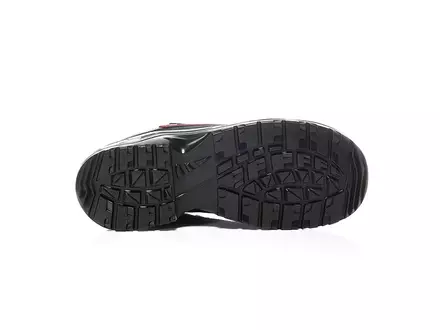
- Coarse-profiled PU/PU sole SAFEGUARD.
- Injected PU toe cap.
- Aluminum toe cap.
- BOA Fit System.
- Extra wide fit, leather-free.
- Available in sizes 38 to 48.
The Senex BOA ESD S3 safety shoes are a model from the Elten Safeguard series featuring ESD equipment and ample room for particularly strong feet. The one-handed laceless BOA Fit system is comfortable and secure. The upper consists of wear-resistant high-tech materials: hydrophobic Cordura and hydrophobic microfiber, which repel dirt and water. The textile lining inside the shoe is breathable. The Senex BOA ESD S3 features an aluminum safety toe cap with plenty of toe room. The flexible, metal-free anti-perforation protection is particularly comfortable when working on your knees.
Even on difficult terrain, the deep-tread Safequard outsole offers excellent grip. Thanks to the reflective material, you stand out in these safety shoes even in poor lighting conditions. These safety shoes are also characterized by durability, as a TPU overcap protects the upper at the toe against wear. Increasingly important in daily work, the Senex BOA ESD S3 safety shoes can be orthopedically adjusted in accordance with DGUV Rule 112-191. Available in sizes 38 to 48.
ESD (Electrostatic Discharge)You can minimize static electricity using conductive materials, such as ESD-approved shoes that literally ground you and discharge static electricity away from your body. In this way, you avoid the transfer of static electricity to the material you are working with.