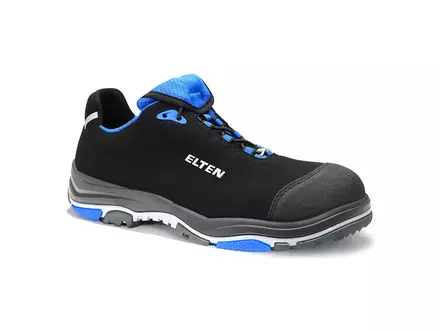
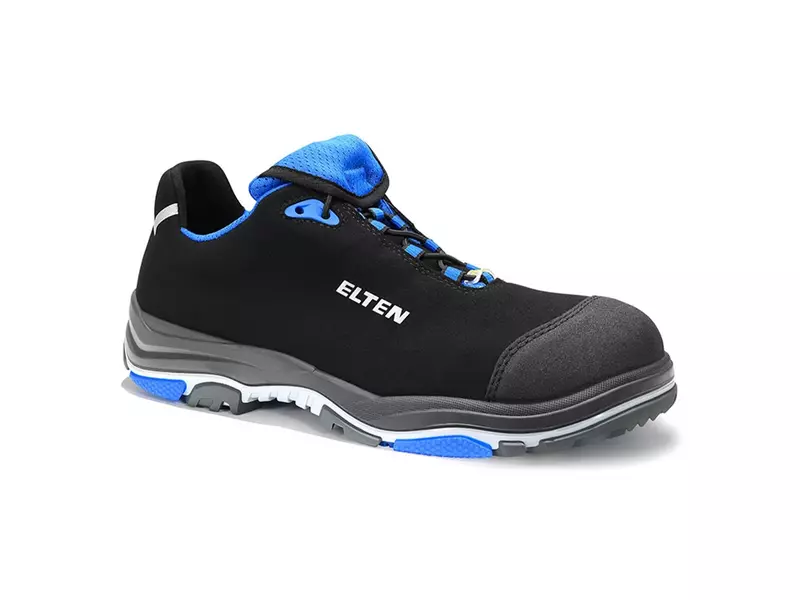
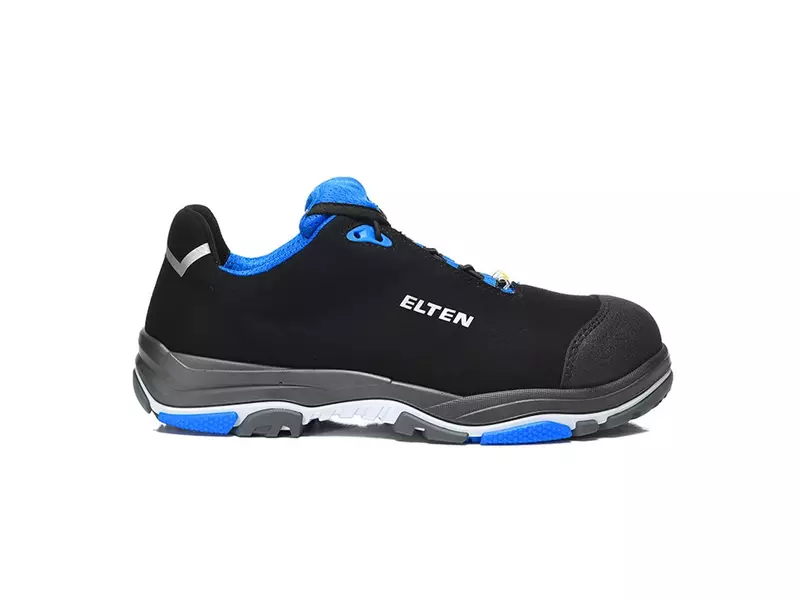
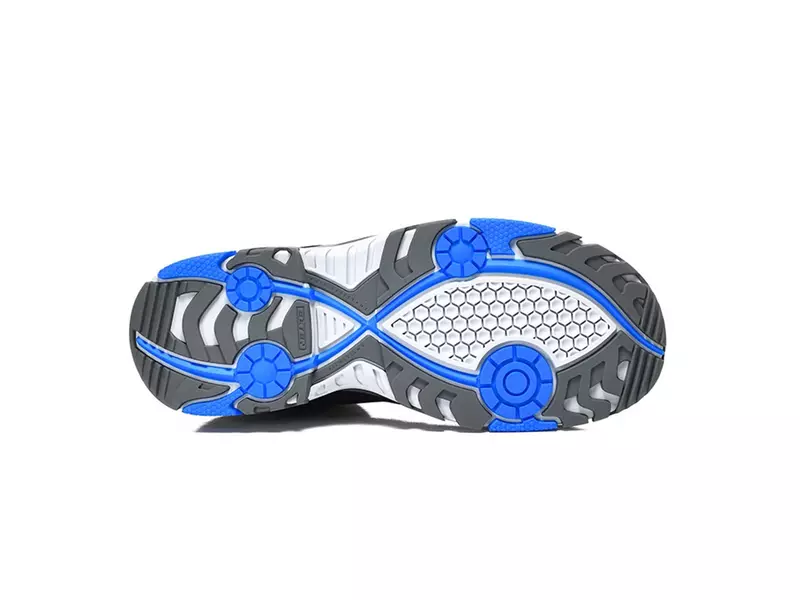
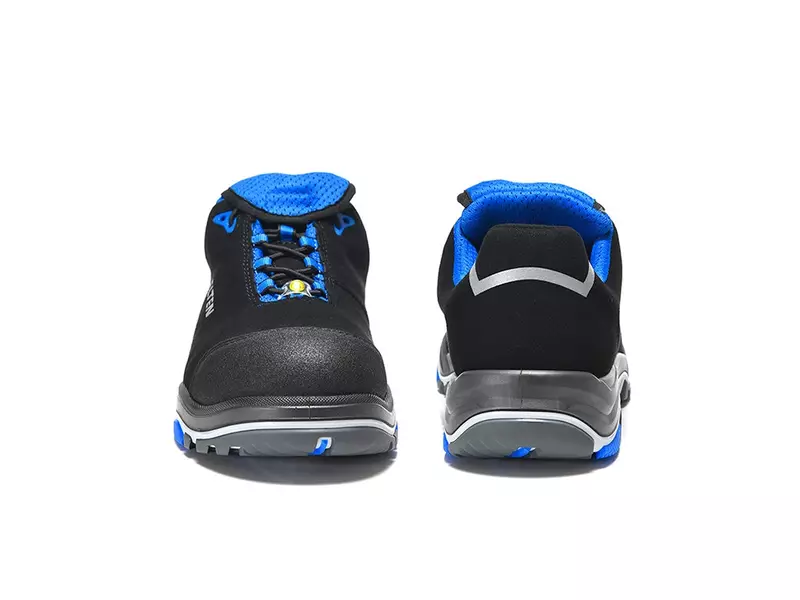
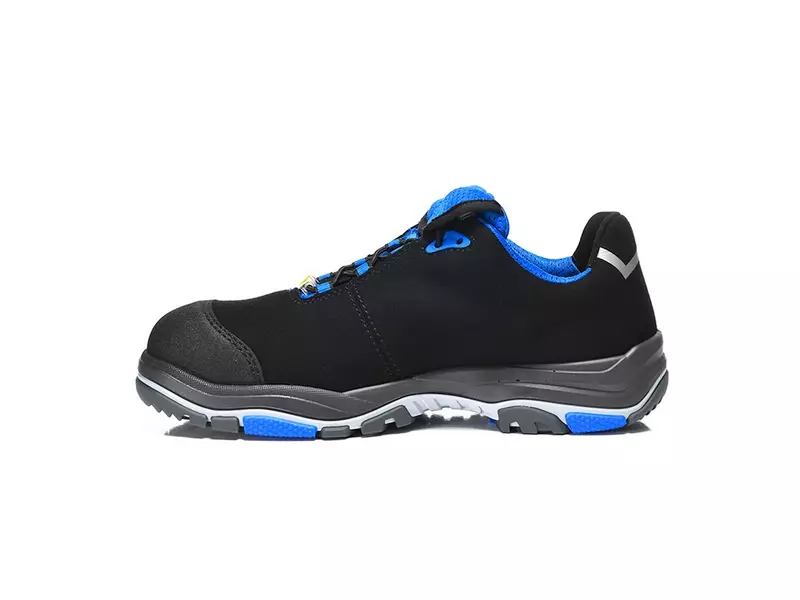
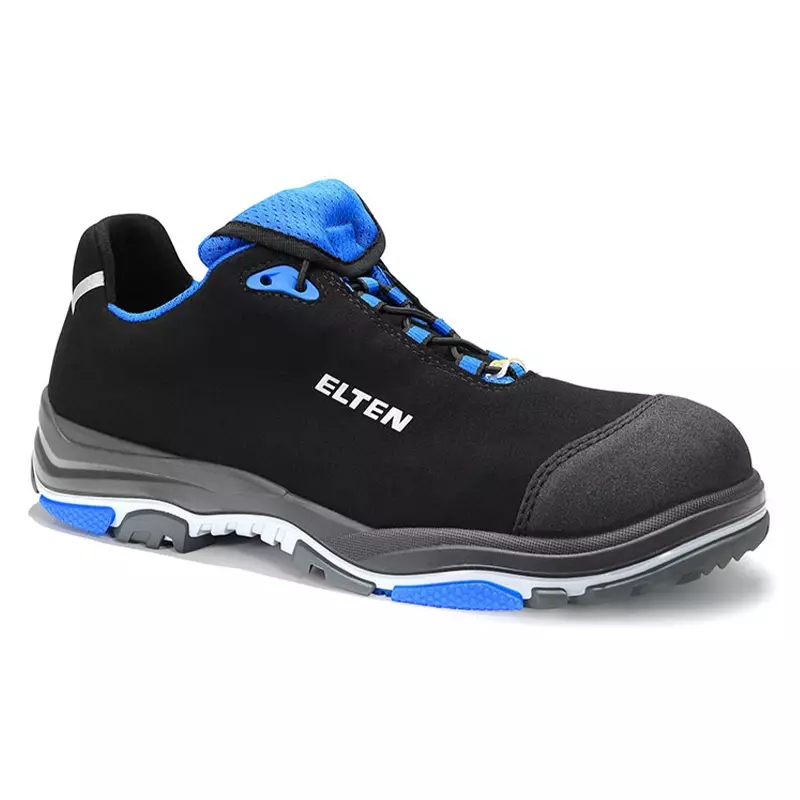
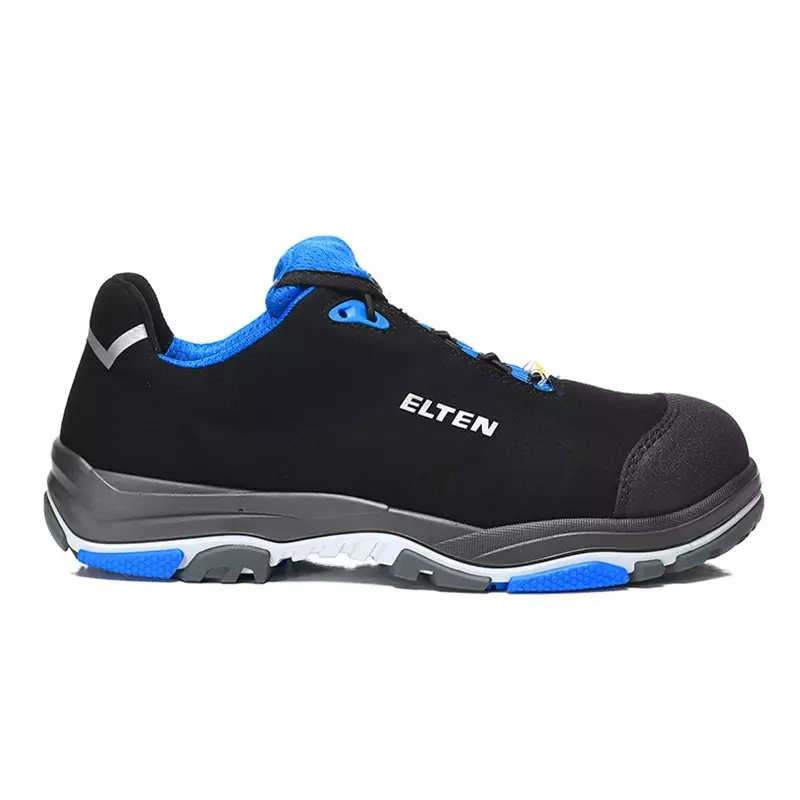
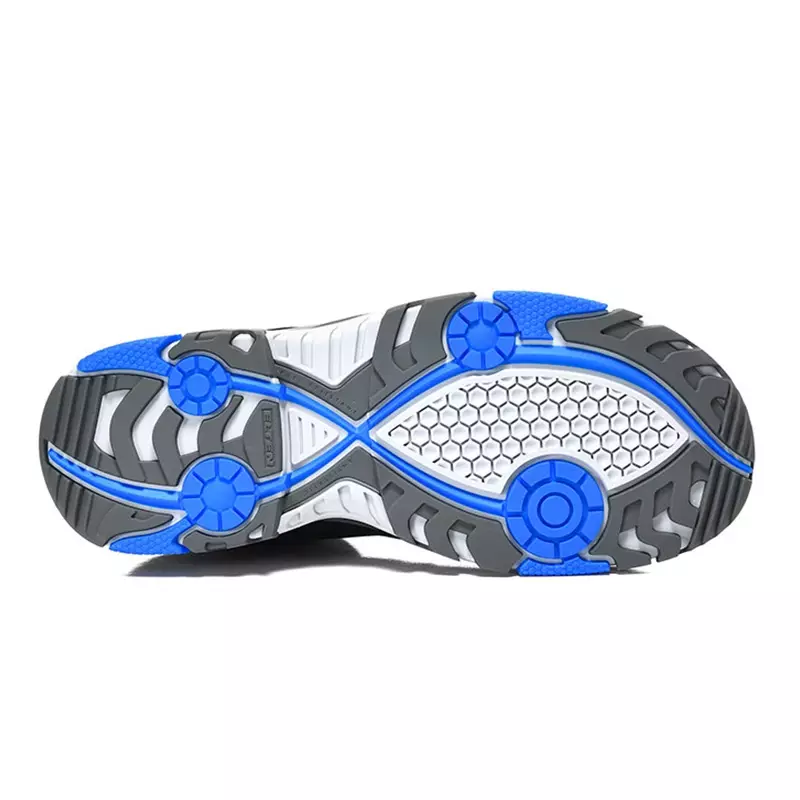
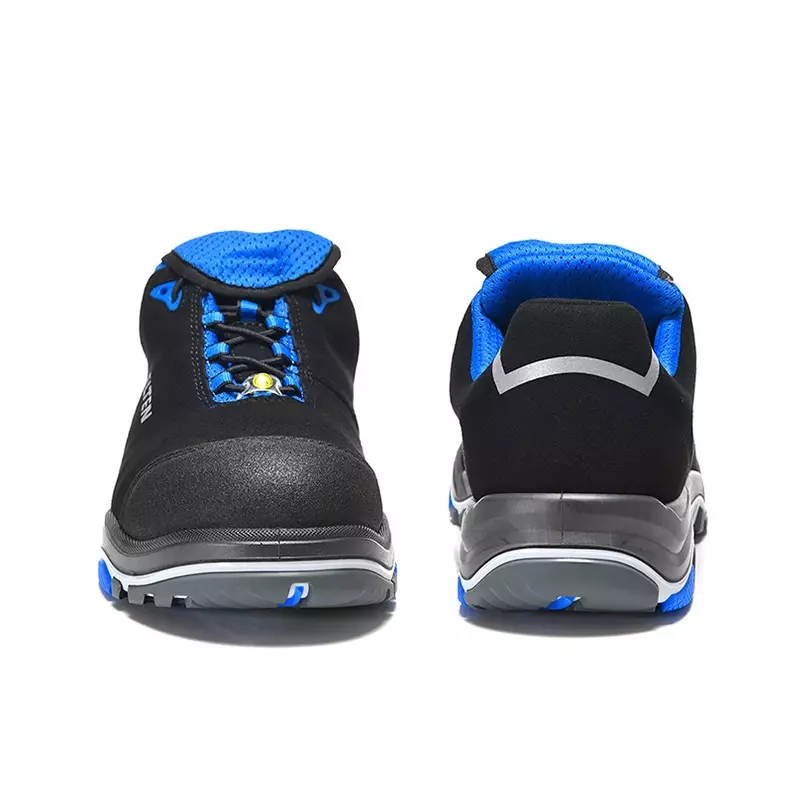
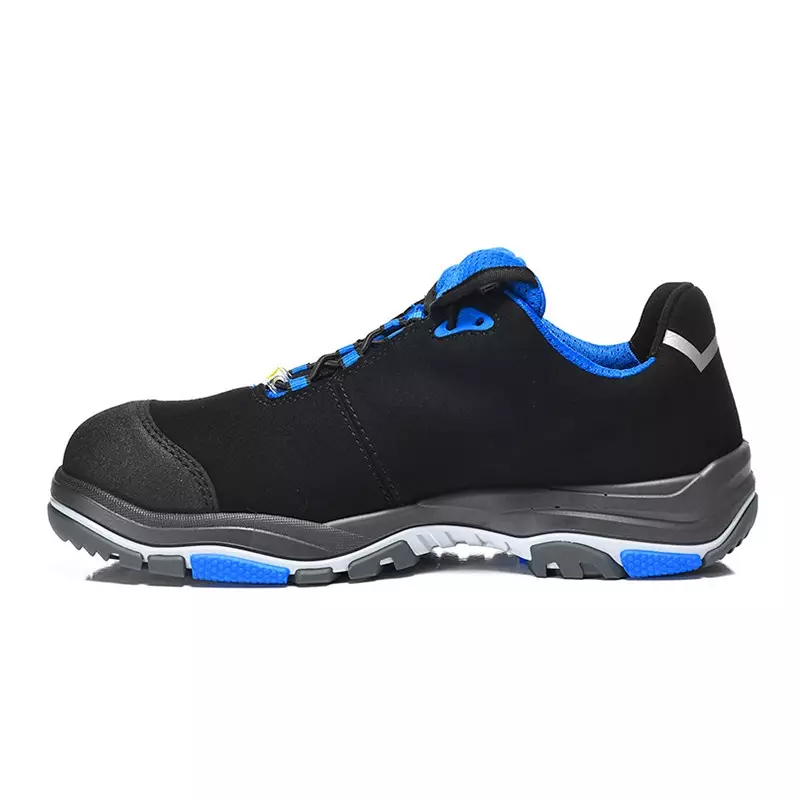
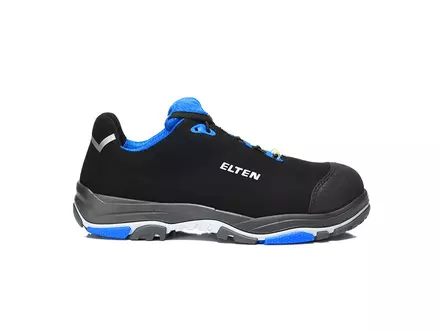
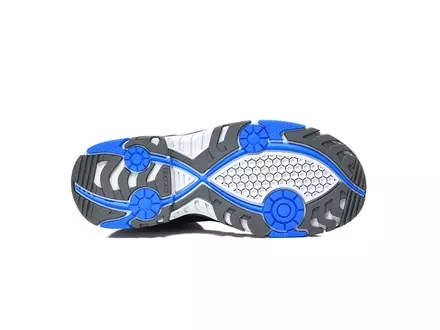
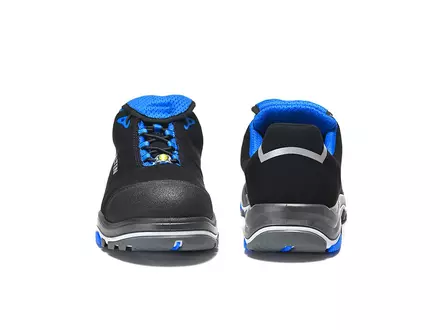
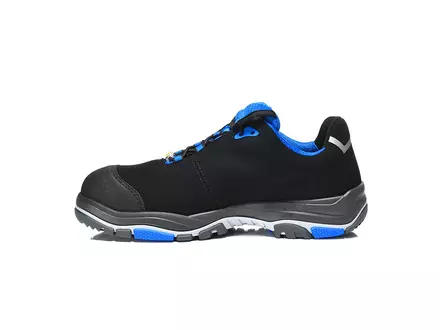
Elten Impulse EA Blue Low S2 low-cut safety shoe with abrasion-resistant steel toe cap. Equipped with a safe SRC anti-slip sole, ESD certification, and TPU/PU Ergo-Active 2 sole. Made of microfiber with a breathable textile lining, including a semi-orthopedic ESD black insole and available in three widths. Elastic laces with quick-release buckle.
- Comfortable low safety shoe.
- Hydrophobic microfiber.
- Breathable textile lining.
- Padded water-resistant tongue.
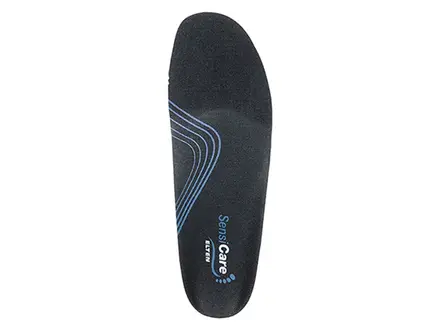
- Semi-orthopedic insole ESD black.
- ESD protective soft fleece insole.
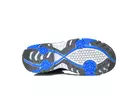
- TPU/PU sole ERGO-ACTIVE 2.
- Abrasion-resistant protective toe cap.
- Steel safety toe cap.
- Elastic laces with quick release.
- Extra laces included.
- 3 different fits: narrow, regular, or wide.
- Available in sizes 40 to 48.
A dynamic foot measurement revealed that most feet can be divided into three different foot types. The ERGO ACTIVE series from ELTEN takes these anatomical differences into account. The IMPULSE EA Blue Low ESD S2 safety shoe in the trendy, solid black design is therefore available in three different fits (type 1, type 2, and type 3). The highlight: thanks to the elastic lacing system with individual quick release, it can be put on and taken off in no time!
But overall, the IMPULSE EA Blue Low ESD S2 can hardly be surpassed in terms of comfort. The semi-orthopedic, ESD-compatible insole and a breathable textile lining ensure extra comfort. The SRC-certified TPU/PU outsole combines two properties: shock absorption and reduction of friction resistance through integrated ergonomic pivot points.
Hydrophobic microfiber as the upper material protects the wearer's foot against moisture, and an integrated steel toe cap protects their toes. The wear-resistant toe protection also increases the durability of the shoe toe. The athletic safety shoe is available in sizes 40 to 48.
ESD (electrostatic discharge)You can minimize static electricity by using conductive materials, such as ESD-approved shoes that literally ground you and dissipate static electricity from your body. In this way, you avoid the transfer of static electricity to the material you are working with.