


- Product ubrs: title
- Rapid test for the detection of specific allergens
- Detection of protein residues on surfaces and in solutions
- Fast, simple, and reliable test results

Bioavid Milk allergen rapid test Milk
Why can't I see prices?
Log in to view your prices or request a quote. Or request an account and we will contact you as soon as possible.
- Product ubrs: title
- Rapid test for the detection of specific allergens
- Detection of protein residues on surfaces and in solutions
- Fast, simple, and reliable test results
Product description
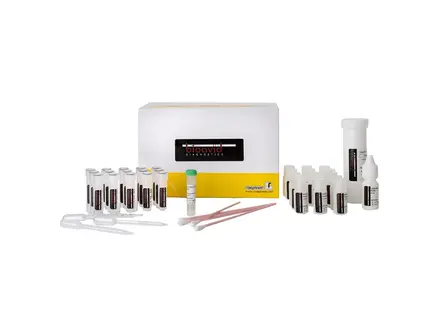
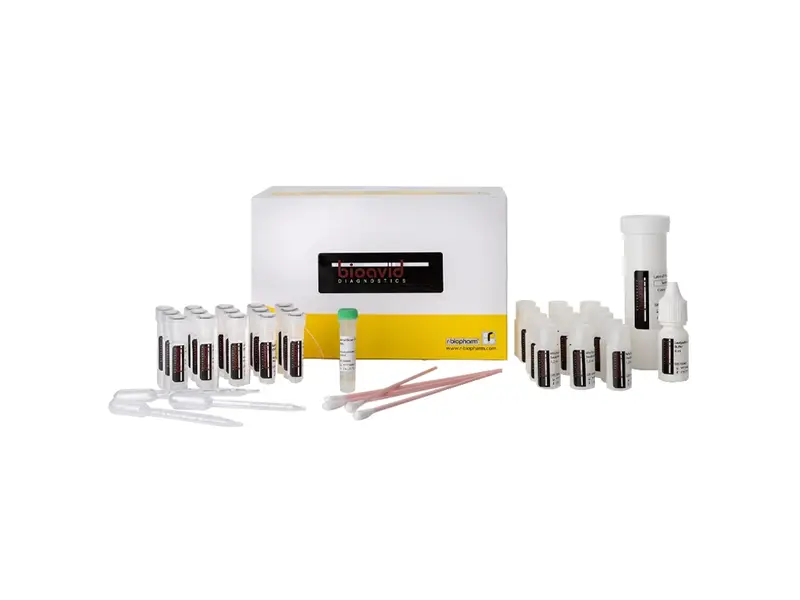
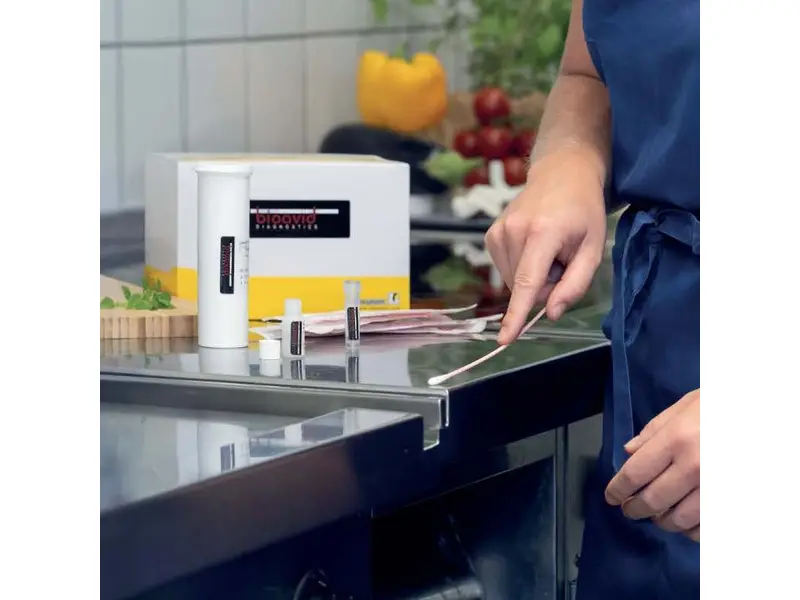
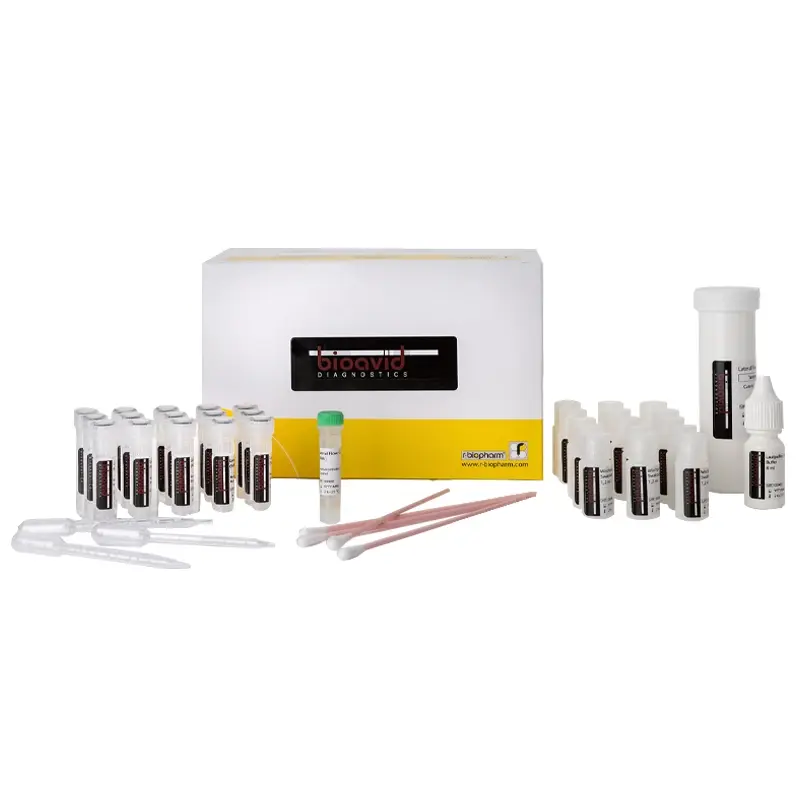
Bioavid's Lateral Flow Milk is an immunochromatographic test for the sensitive and qualitative detection of milk residues on surfaces (e.g. hygiene control in food production lines), during cleaning, in process water (CIP water), and in food samples. Everything for swabbing is included in the kit. Contains the complete equipment for the analysis.
Cow's milk contains various proteins that can be allergenic. The most important are casein and β-lactoglobulin. Cow's milk contains 3.2% protein, consisting of approximately 10% β-lactoglobulin (the main protein of whey), approximately 80% casein, and approximately 10% other proteins. Thus, a sample containing 1 mg/kg of milk protein corresponds to a milk content of approximately 31 mg/kg of milk. Casein is heat-stable, while β-lactoglobulin is heat-sensitive. Most milk allergy patients are allergic to both protein fractions in milk. The main allergen for children is β-lactoglobulin, while casein becomes dominant later in adults.
It is important to note that milk allergy is not the same as lactose intolerance. The cause of lactose intolerance is a deficiency of an enzyme that breaks down lactose (milk sugar). Milk allergy, on the other hand, is a true food allergy caused by allergenic components of milk proteins. Milk is consumed directly, as a beverage, or as a processed product such as cream, butter, yogurt, or cheese. Cow's milk powder is widely used in baked goods, sauces, and desserts. Casein can be present as an ingredient or as a contaminant in raw and processed food products. Skimmed milk powder or caseins/caseinates are often added to food products (for example, in sausages) to increase protein content or as a thickening agent.
Food production lines and the food itself must be free of residues to prevent these allergic reactions. The effectiveness of the cleaning can be verified by using a lateral flow method for milk detection. According to Regulation (EU) No 1169/2011, milk and products derived from it must be listed on food labels. Similar regulations exist, for example, in the US, Canada, Australia, and New Zealand.
Dip Sticks are a user-friendly method and ensure a fast and reliable analysis. Applying the Bioavid Dip Sticks is very simple and can be performed by untrained personnel. All Bioavid test kits can be stored at room temperature and are therefore an ideal tool for direct testing in production facilities. The Bioavid test kits contain the complete equipment for the analysis.
Sample preparation
• Surfaces (swabbing): wipe the surface with a cotton swab moistened with PBS and rinse the swab in the reaction vessel.
• Food samples: homogenize the food sample and centrifuge or filter.
• Liquid samples (e.g. CIP water): no preparation.
LOD (Limit of Origin)
• Cow, buffalo, goat, sheep milk (in water): 0.1 ppm
• Spiked zero matrices: > 10 ppm
• Surfaces (smears): 3 µg cow milk / cm²
• CIP water: 0.1 ppm cow milk
- Rapid test for the sensitive and qualitative detection of milk residues on surfaces.
- Ideal for hygiene control in food production lines, process water (CIP water), and food samples.
- Fast and easy method to qualitatively detect milk residues in food samples.
- Very simple and can be performed by untrained personnel.
- Can be stored at room temperature.
- Ideal tool for immediate testing in production facilities.
- Everything for swabbing is included in the kit.
- Contains the complete equipment for the analysis.
- Fast and reliable results in 10 minutes.
Cow's milk contains various proteins that can be allergenic. The most important are casein and β-lactoglobulin. Cow's milk contains 3.2% protein, consisting of approximately 10% β-lactoglobulin (the main protein of whey), approximately 80% casein, and approximately 10% other proteins. Thus, a sample containing 1 mg/kg of milk protein corresponds to a milk content of approximately 31 mg/kg of milk. Casein is heat-stable, while β-lactoglobulin is heat-sensitive. Most milk allergy patients are allergic to both protein fractions in milk. The main allergen for children is β-lactoglobulin, while casein becomes dominant later in adults.
It is important to note that milk allergy is not the same as lactose intolerance. The cause of lactose intolerance is a deficiency of an enzyme that breaks down lactose (milk sugar). Milk allergy, on the other hand, is a true food allergy caused by allergenic components of milk proteins. Milk is consumed directly, as a beverage, or as a processed product such as cream, butter, yogurt, or cheese. Cow's milk powder is widely used in baked goods, sauces, and desserts. Casein can be present as an ingredient or as a contaminant in raw and processed food products. Skimmed milk powder or caseins/caseinates are often added to food products (for example, in sausages) to increase protein content or as a thickening agent.
Food production lines and the food itself must be free of residues to prevent these allergic reactions. The effectiveness of the cleaning can be verified by using a lateral flow method for milk detection. According to Regulation (EU) No 1169/2011, milk and products derived from it must be listed on food labels. Similar regulations exist, for example, in the US, Canada, Australia, and New Zealand.
Dip Sticks are a user-friendly method and ensure a fast and reliable analysis. Applying the Bioavid Dip Sticks is very simple and can be performed by untrained personnel. All Bioavid test kits can be stored at room temperature and are therefore an ideal tool for direct testing in production facilities. The Bioavid test kits contain the complete equipment for the analysis.
Sample preparation
• Surfaces (swabbing): wipe the surface with a cotton swab moistened with PBS and rinse the swab in the reaction vessel.
• Food samples: homogenize the food sample and centrifuge or filter.
• Liquid samples (e.g. CIP water): no preparation.
LOD (Limit of Origin)
• Cow, buffalo, goat, sheep milk (in water): 0.1 ppm
• Spiked zero matrices: > 10 ppm
• Surfaces (smears): 3 µg cow milk / cm²
• CIP water: 0.1 ppm cow milk
Specifications
Productspecificaties
| Manufacturer | R-Biopharm |
| Brand | Bioavid |
| Type | Milk |
| Product Group | Allergen tests |
| Detection | Milk residue |
| Evaluation | Visual |
| Packaging unit | Set of 15 pieces |
Bioavid Milk allergen rapid test Milk


Loader overlay: loading text